
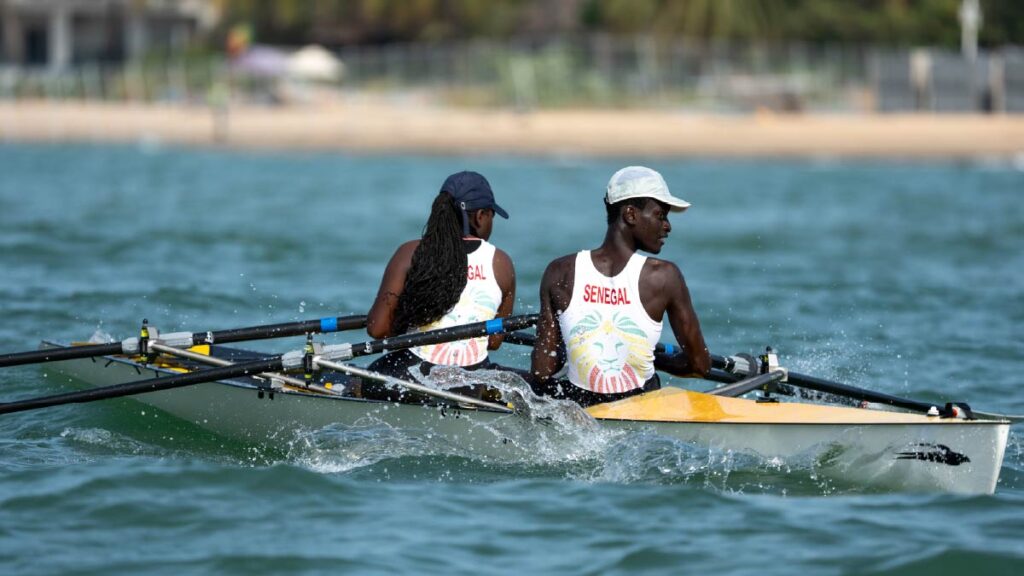
On Tuesday afternoon, a few minutes past midday, the beach sprint competition at the Dakar 2026 Youth Olympic Games will wrap up. We’ll finally know who won the first ever Olympic medals in rowing’s newest discipline, and for many of the athletes and coaches, thoughts might start shifting to flights home, end of season breaks and what might be coming next in 2027. The temporary infrastructure on the sand and in the water at Saly Beach West will likely begin to be quickly dismantled, while boats will be derigged and loaded onto trailers for their onward journey. Come back a day or so later, and the beach sprint Youth Olympic race course may simply be a beach again.
But encapsulated within that well-practiced, end-of-regatta scene is something that is on the minds of both the Senegal Rowing Federation and World Rowing: What legacy will Dakar 2026 leave behind?
“The boats they’re using here will go after the race,” says Cheikh Moubarack Wade, president of the Senegal Rowing Federation. “But we are doing our best to keep them here.”
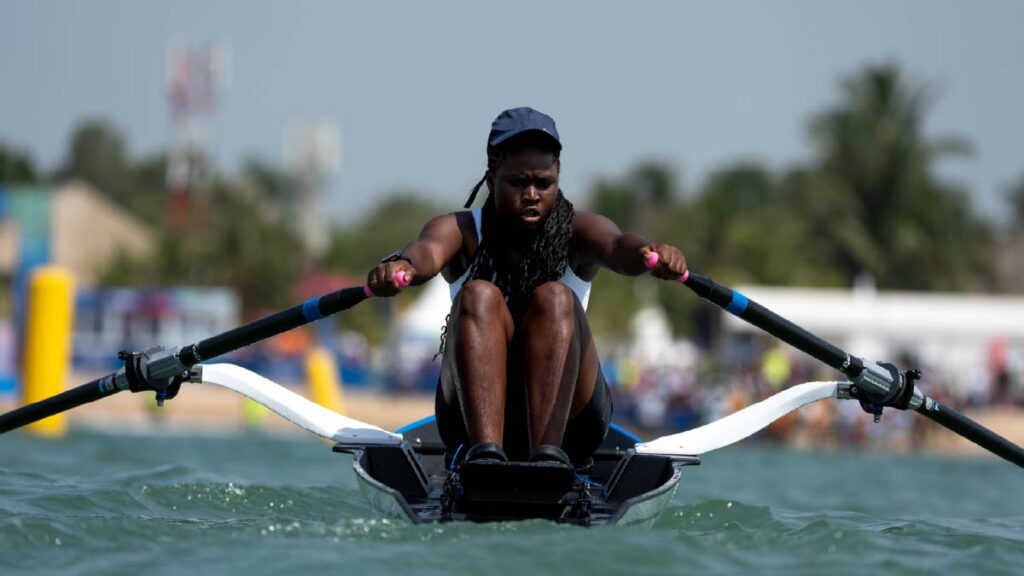
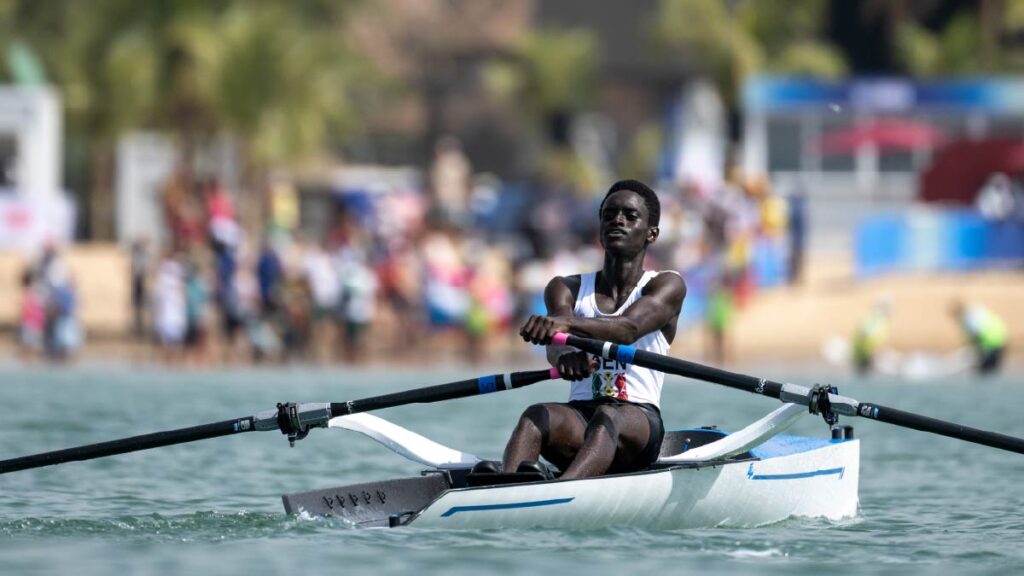
The home team’s rowers didn’t manage to reach the last 16 knockout round in either the men’s or women’s solos, or in the mixed double, and must watch from the sidelines as visiting athletes go on to compete for medals. But both El Hadji Malick Lo and Diadou Cisse began yesterday at a disadvantage. They only began rowing about a year ago, and most of their training to date has been on flat water. Their first experience of beach sprint came 10 weeks back, on a training trip to Tunisia. In Senegal, they don’t (yet) have access to coastal rowing boats. And this explains why Wade sees so much potential if the boats from Dakar 2026 can stay, and not just for Senegal.
“Once the boats are kept here,” Wade says, “we can organize the West African championships, we are near Gambia, Mauritania and Guinea, and Dakar can be a hub for those countries to develop rowing together.”
Wade and his federation have the broad support of World Rowing in this, although that might not be enough. One of the unique elements of beach sprint is that at the biggest international competitions, neither the national teams, World Rowing nor the organizers own the boats that are used. Manufacturers build and ship their boats to races like world championships, provide support during the regattas, and then either ship them back home, or find a way to sell them on, and all at the cost of the manufacturer itself.
“The biggest thing we’re trying to ensure happens is to leave equipment behind,” says World Rowing CEO Vincent Gaillard. “Equipment is a big part of the equation.”
The Dakar 2026 fleets of Filippi solos and Swift Racing doubles are owned by Filippi and Swift Racing, respectively. And while neither company publicly posts its prices online, the total value of the equipment each has brought to Senegal is likely to be above 50,000€ per manufacturer, although the resale price after a beach sprint regatta may be lower. Even if the boats end up being donated, there could also be a complication of import taxes if the boats aren’t exported back outside Senegal. A free boat still has an intrinsic value.
“Some of it we hope will be left behind,” Gaillard says. “That’s easier said than done, but these two companies have been very involved historically in helping us with our development programs. So they do provide boats. Whether they will in this particular instance we will see.”
Wade was formerly the secretary general of Senegal’s canoeing and rowing federation, but three months ago the two sports were provisionally split and he took up the role of president of the rowing federation. That status isn’t guaranteed, though, and in two years time a decision will be made over whether rowing can become a full federation. He is very aware of how much he must develop the sport in order to justify that.
His strategy divides the country into regions, and gives each area the target of launching four new clubs. The idea is that rowers could then compete locally and nationally, and internationally, too. Not every part of his plan is centered on coastal—he also has interest in indoor, adaptive, flatwater and masters—but with 700km of coastline and a lot of sandy beaches, he believes beach sprint offers a huge opportunity to Senegal.
Wade also has a potential permanent training base picked out at Ngaparou, just a few kilometers away from where the beach sprint competition at Dakar 2026 is taking place. Ultimately, while boats are essential to rowing, infrastructure and organization are critical, too.
While Gaillard is in favor of trying to convince the manufacturers to donate at least some of their boats, he admits that there is a fear that expensive equipment could end up unused or damaged. “Leaving boats behind also for us needs a certainty that they will be managed and taken care of and used by the right people,” Gaillard says.
But time might be running out for rowing’s Dakar 2026 legacy, or at least the part that might involve equipment. If the boats leave on Tuesday or Wednesday, and head out of Senegal, they probably won’t be coming back.
“We only have three days to make a decision,” Wade says.