
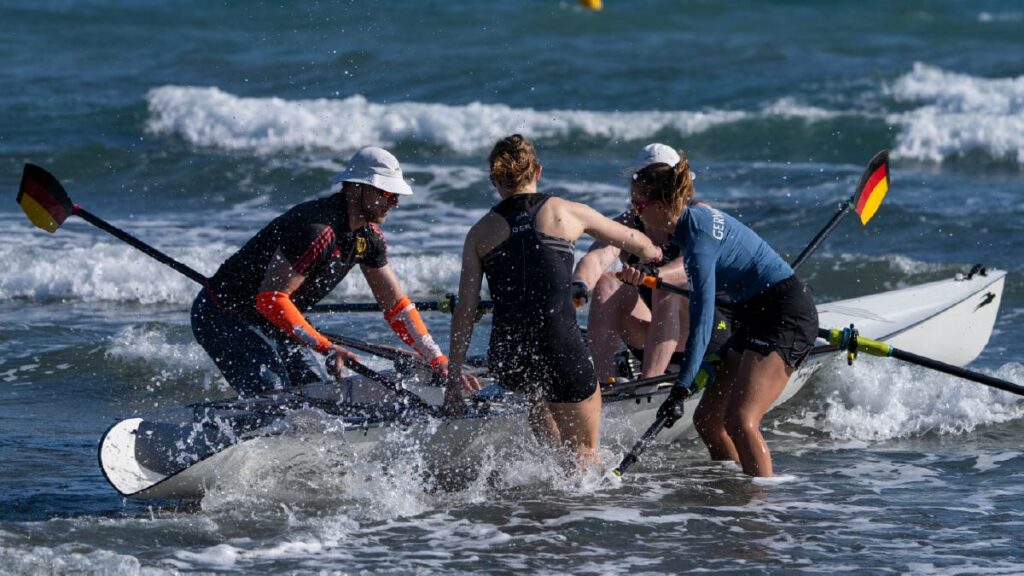
Coming from the more traditional, more serious world of flat-water rowing, Adrian Bretting was expecting the 2024 World Rowing Beach Sprint Finals to be a circus. Yet what he discovered in Italy that September, he says, was “the next level of rowing.”
Back then, he was the head coach of Germany’s under-19 classic rowing team. He’d just gotten back from World Rowing’s combined under-19, under-23 and senior world championships in St. Catharines, Canada, where he’d been in charge of a team of 56 German juniors, including alternates, racing in a dozen different disciplines. His athletes had reached the A final in all of those events, and picked up one gold, two silver and four bronze medals. He was tired and burned out, and badly needed a vacation.
However, he’d been asked to fill in to support the country’s coastal athletes in Genoa. And sometimes as a rowing coach you have to help out and do these things even if you don’t really want to.
“But in Genoa, I was standing there the first day, a training day, just looking out at the water,” Bretting says, “and there was action everywhere.” He glanced down at his watch, and hours had passed in a heartbeat. “I’m standing there for nearly two hours, just watching, and I wasn’t bored. It was just very exciting.”
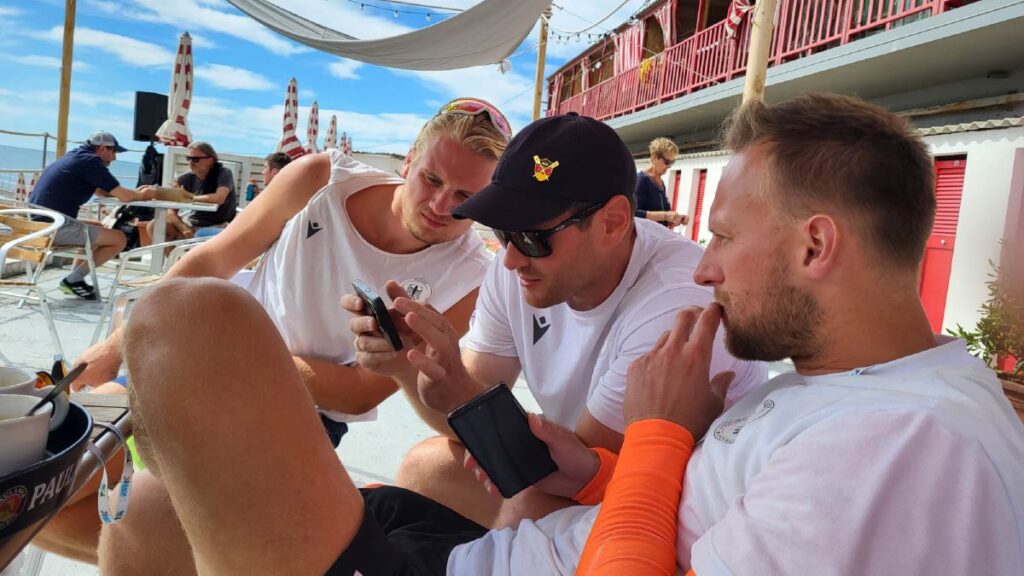
He began to think about Moritz Wolff, an athlete he’d worked with as a kid in Berlin. Wolff had come through the youth teams of the Berliner Ruder-Club, where Bretting had been head coach from 2014 until he took up his role with the under-19 national team in 2022. They’d worked together since 2016, and Bretting had coached Wolff at two junior world championships, in 2017 and 2018.
Wolff had won three silver medals at the world youth level: in the junior single in 2017, the under-23 quad in 2019 and the under-23 double in 2021. And, now a senior, he’d just raced in the German men’s quad at the Paris 2024 Olympic Games, finishing fifth.
“I looked out over the water, and I was completely sure that this is the thing for Moritz,” Bretting says. “Because of his skills, because of his running skills, these other things. I was really sure that he is the right athlete for this. I had to ask him if he’d do it.” (Wolff said yes, and a year later finished fourth in the men’s solo at 2025 worlds.)
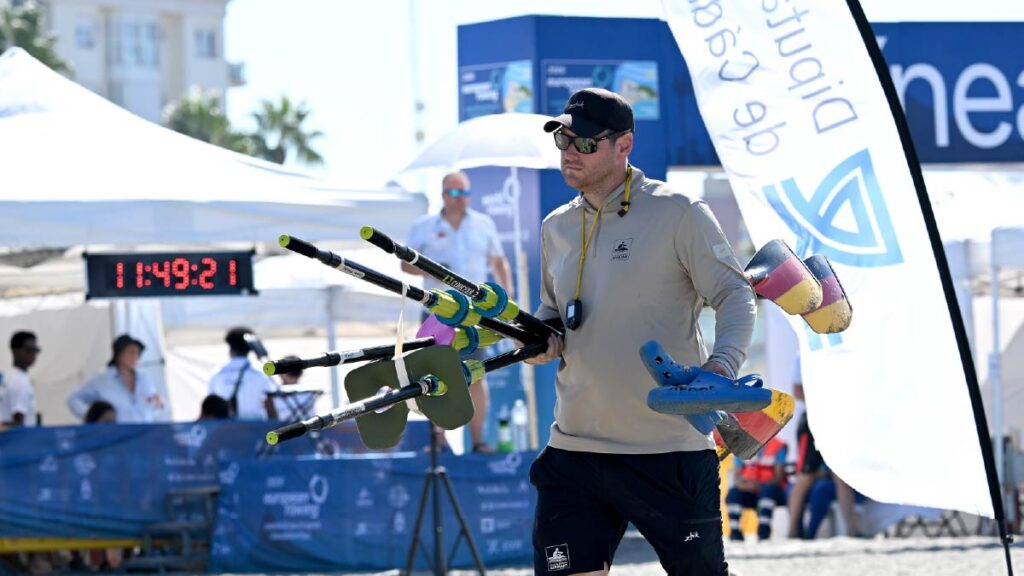
When the German rowing federation decided to embrace coastal rowing, it could have copied the model of several of its rivals who have jumped into the beach sprint world over the last few years, hiring a foreign expert with far more experience in coastal rowing than Bretting. To some extent, this is exactly what iconic German boatbuilder Empacher did, signing a partnership with Spanish firm Rubenetti in 2025 to bring in the experience of Rubén Muñoz to build the hulls of Empacher’s new coastal boats.
“[But] in Germany, the skills you need in this position are not just only about the training and the sport. It’s more about how to build up a completely new discipline,” says Bretting, who temporarily doubled up his role with the junior classic team, before officially becoming the head coastal coach in April 2025. “So to build up new structures, to build up a new network. For example, I’m writing a lot of requests to get money for this. It’s not just ‘I get in the motorboat, we do the training, I get out of the motorboat and go home.’ It’s more like a startup.”
Before becoming a coach, Bretting rowed as a lightweight on the German national team—he won a world championship silver medal in the lightweight eight in 2008—graduated with both a bachelors and a masters degree in sport science, and worked for a few years in sports marketing. He says that his role at Berliner Ruder-Club encompassed a lot more than just coaching, too.
In January 2025, in the depths of winter, Bretting began to take stock of what he would soon inherit. “The German federation had three singles and a double that they bought a few years ago, and that were more for recreational rowing. They got a good offer and had some money. They were not [intended] for high performance. We picked up these boats up on a farm. They were in a big garage,” Bretting explains.

Fast forward less than two years, and much has changed. “When you come to Berlin now, at our training center, there are 15 completely new coastal boats, in perfect condition.”
His fleet consists of seven Swift Racing boats (three doubles and four singles), six Filippis (one double and five singles) and five Empachers (two doubles and three singles). Bretting has his options neatly covered for whichever of the top three manufacturers might be the boat supplier for the Olympic disciplines at international regattas, and at LA28.
A few of the current group of athletes—Franz Werner and Julia Tertuente—were already there when Bretting made that first trip to worlds, but many parts of the German national team that you’ll see now, and more that you won’t see because they are behind the scenes and far from the beach, dates from the arrival of both Bretting and his close friend and assistant Hendrik Bohnekamp.
As well as their headquarters in Berlin, the German team also has a training base in São Martinho do Porto in Portugal. And Bretting has leveraged the country’s network of Olympic training centers and Germany’s Institute for Research and Development of Sports Equipment (FES) to rapidly make up ground on his international competition. The FES is the same body that builds track bikes for the Summer Olympics or bobsleds for the Winter Games, and the equipment it makes is developed so that Germany can win more medals.
“Maybe this is one of my skills,” Bretting says. “To find the right guys to do it with, not just the athletes, more about the team in the background.”
He says that he has been given a very free hand by his bosses, Marcus Schwarzrock, Germany’s overall head coach, and Robert Sens, the board member who oversees competitive rowing. “We wouldn’t be where we are if every two weeks they said we need to do this, or this, or this.”
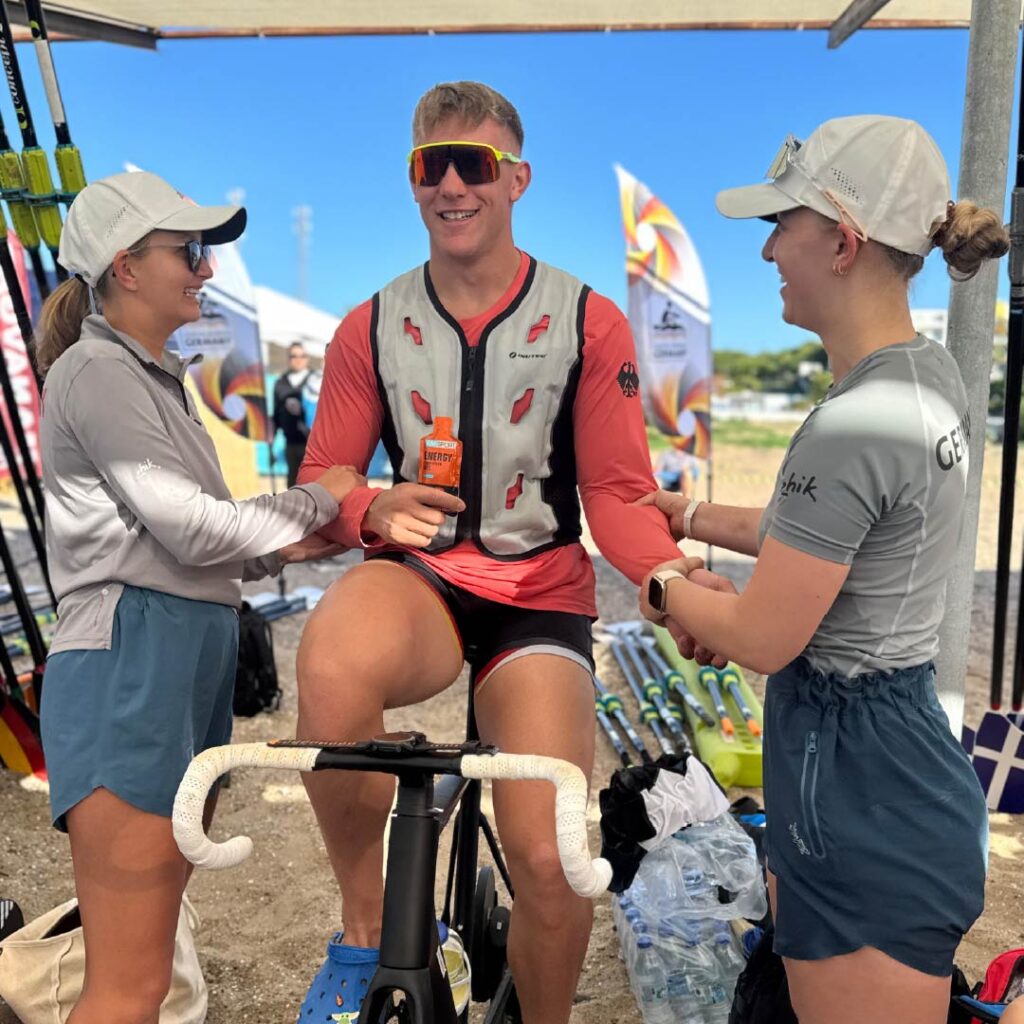
The same ethos filters down to the rest of the team, too. “We have a small but very high quality crew, and we are very close together. There’s very good teamwork, that makes it fun.” Bretting might be the head coach, but he doesn’t want to create hierarchy. “Nobody has a problem to say something. If you have advice or you have an idea, let’s talk about it. I think there’s a good spirit and there’s no hierarchy. I would never say to the team ‘My opinion is the right one.’”
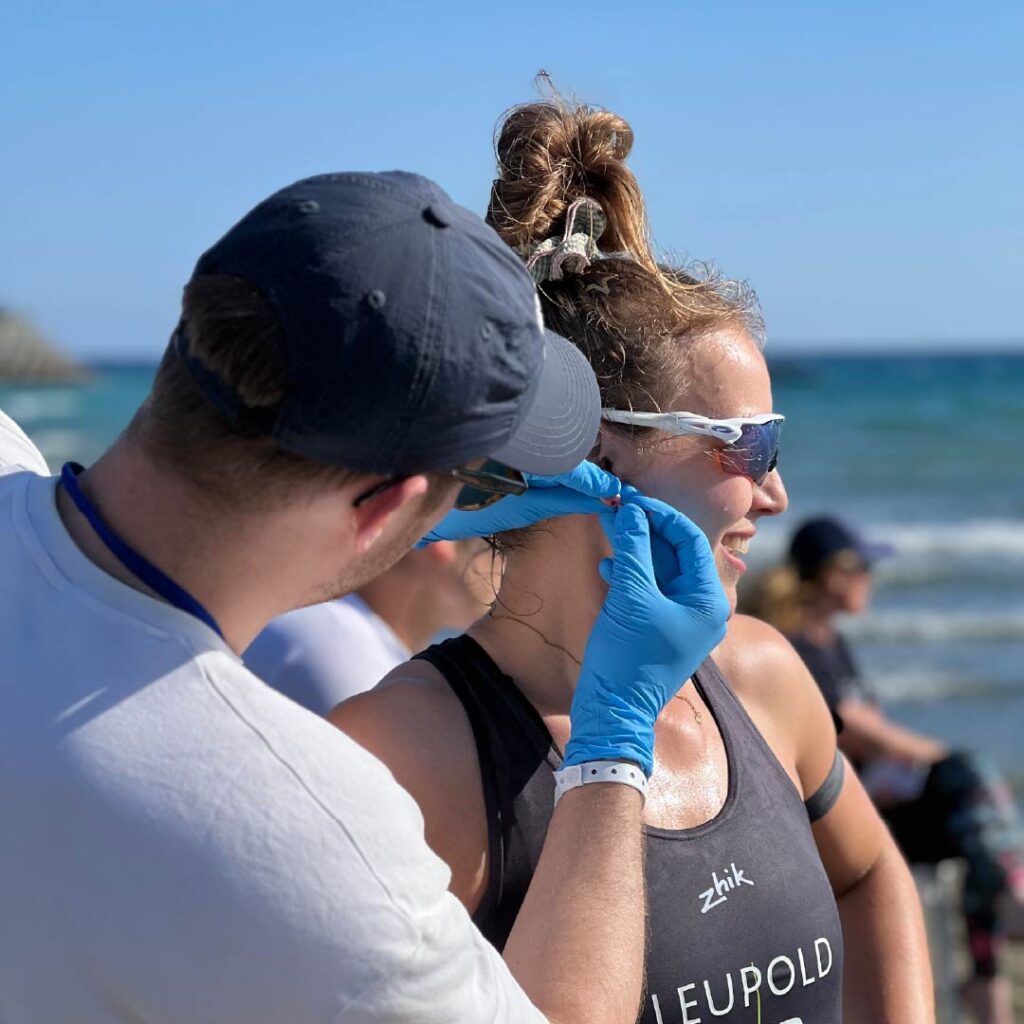
As well as his athletes and Bohnekamp, who is also the head coach of the junior coastal team, Bretting counts on the support of Katrin Hussendörfer and Franziska Zeuch, who double up roles as both physical therapists and boat handlers, and team doctor Kristian Schneider. This past season he brought on a sports psychologist, Fabian Kiewel, and two dedicated sprint coaches, Timo Kirchenberger and George Petzold, at the team’s training base in Berlin. He also relies closely on the collaboration of two young sports scientists, Amber Bittscheidt and Mats Jacobs.
“These sports scientists are 24 and 28 and they are so motivated and so hyped to build up a new discipline and find the secrets behind this. That is a lot of fun for them,” he says. He believes that unlike classic rowing, which in Germany is well-understood, and has training plans and technical goals based on years of research and experience, beach sprint offers Bittscheidt and Jacobs significant opportunity to experiment and innovate.
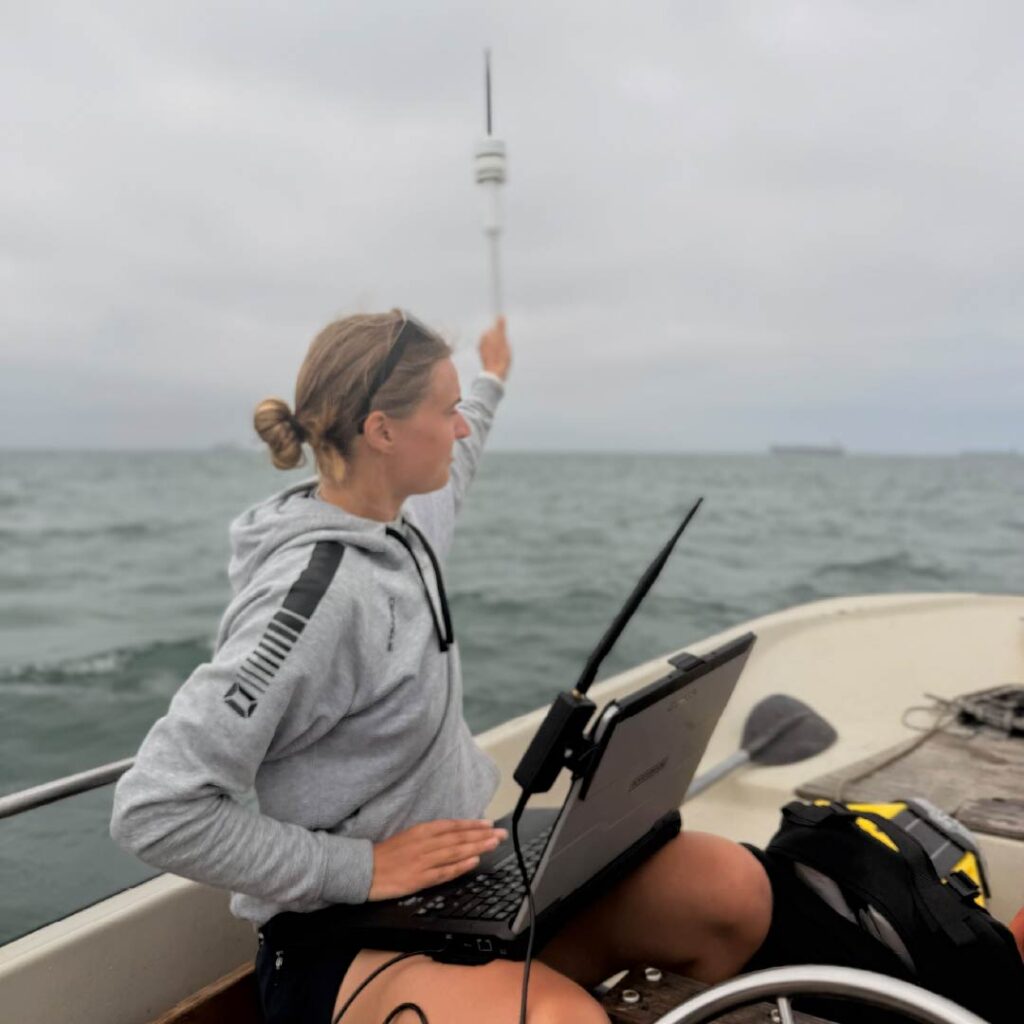
Jacobs is responsible for testing and training plans, which in beach sprint frequently means inventing entirely new protocols. Bittscheidt is a biomechanist and works closely alongside the FES. She has developed a bespoke measurement platform using GPS sensors that were originally created to study triathletes, and which Bretting says are accurate enough to see an athlete lean from side to side.
“We can see the boat entry. We can measure it because of the first stroke. We see the first stroke and you see it when you stop and you see all these things,” he explains. “It’s really the same. In triathlon they measure when they come out of the water, the time for the change.”
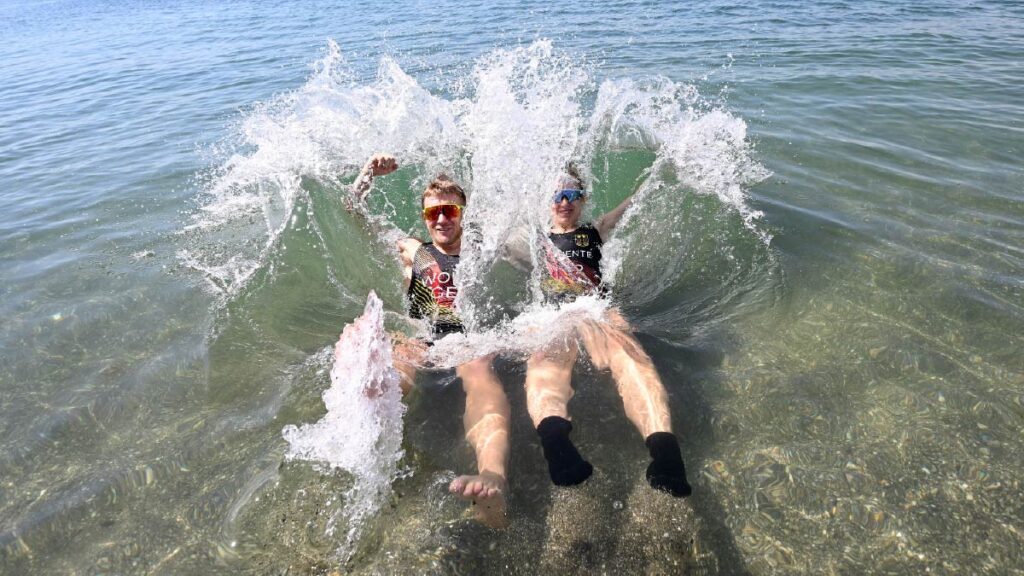
At the 2026 World Rowing Beach Sprint Finals, Bretting’s leading four athletes—Sophie Leupold, Tertuente, Werner and Wolff—aren’t competing in the same boats they raced a month ago at European championships, regardless of the fact that Wolff and Tertuente beat Lithuania’s reigning world champion double to gold in La Línea. Bretting wants them to practice both the solo and the double, and believes that right now is too early to specialize.
“It doesn’t make sense for us,” he says, “because then in L.A. we will have just this one shot. They need experience in the single. And this is one thing I am very proud of. The athletes are very happy with this.”
He admits, though, that in 2027 the plan is likely to change. Before Germany can win an Olympic medal, first it must qualify. And the way that quota places will be assigned gives priority to the mixed double. “Maybe this year we have the last chance to do some experiments like this,” he explains. “Next year you have the Olympic qualification. It could be better to focus on a good double, because then you get the complete spots.”
Time may be up, too, for any more of Germany’s elite flat-water rowers to make the jump across before Los Angeles. All of the four that will race in the Olympic events in Qingdao this week have previously represented Germany in classic rowing. Perhaps others might want to attempt the switch if they don’t make it into flat-water boats in the coming months—while there is only one male and one female beach sprint spot available for LA28, those are still valid tickets to the Olympics.
“A year ago I would have said I’m sure that more will come from classic rowing. And that if they have the skills of classic rowing they will be very good here. But what we saw this year is it’s not possible to change anymore,” Bretting says. “Because these skills you need, to get in the boat, the turns, the others are two steps forward. You will not get to this level now. It’s too late.” Instead he believes that internal competition to break into the solos or the mixed double is more likely to come from the athletes sitting in the mixed quad this year.
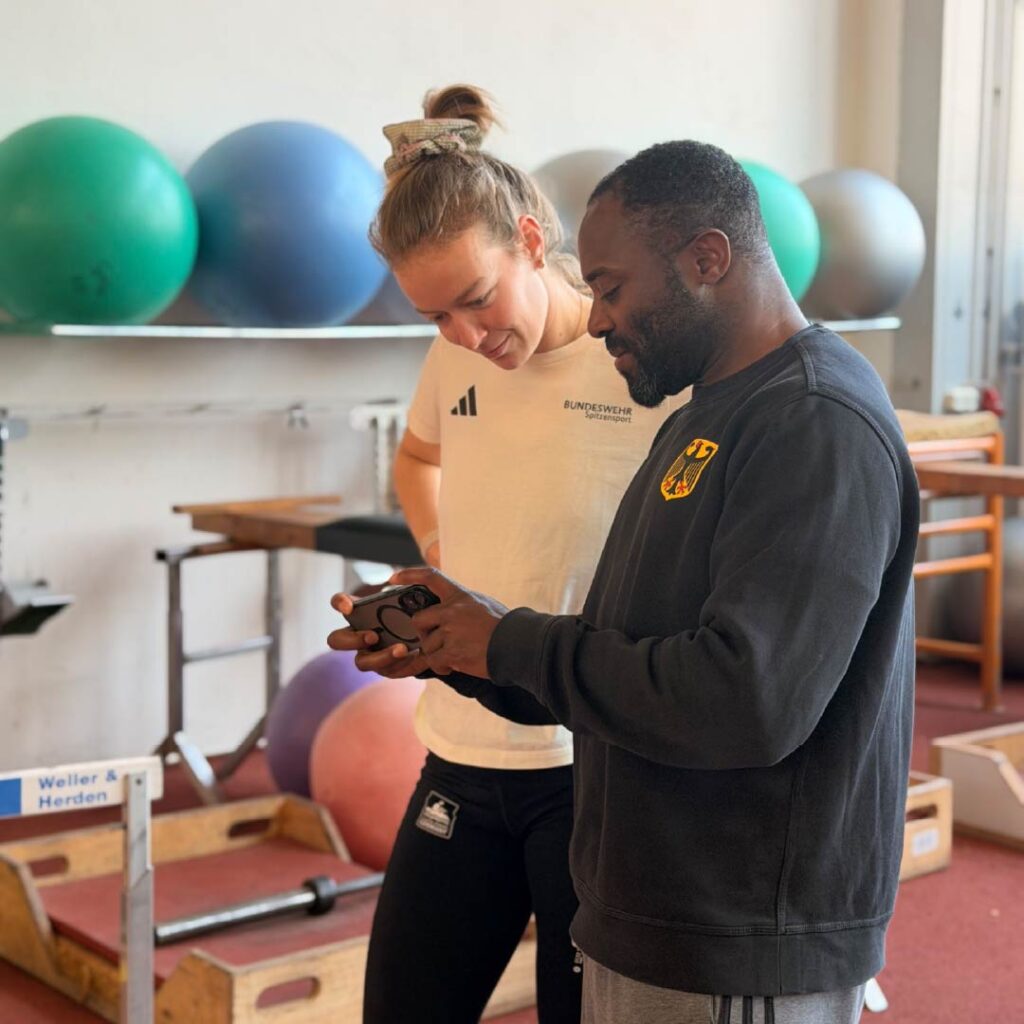
There is much more to beach sprint than technique, too. More and more, the physiology of beach sprint athletes is diverging from that of their classic rowing companions. “You need to train this anaerobic part and this power. That’s not what you train in classic rowing,” Bretting says “We do special tests in our sports hall to test this. And we see this: the first one is really close, but after that, the experienced guys are in front.”
This growing difference between classic and coastal also illustrates one of the biggest challenges that Bretting and Bohnekamp, head coach of the junior coastal team, will face in the next few years: youth development.
“In Germany, in junior rowing, more than 2,000 juniors will compete at nationals. In coastal, 10,” Bretting explains. “That’s a big problem. We don’t have a huge youth component.”
In spite of medalling in every junior category at 2025 worlds, and the fact that Germany’s youth rowers topped the medal table at the 2026 Coupe de la Jeunesse Beach Sprint two weeks ago, Bretting jealously eyes the junior base of some of his key European rivals. “We have a big problem, against Spain, against Portugal, against Italy.”
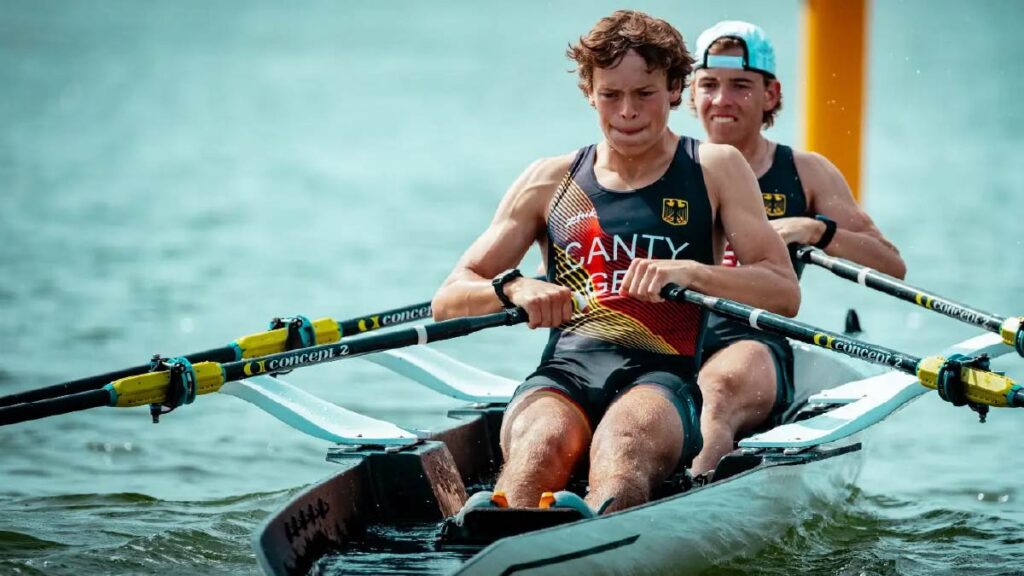
That difficulty in part comes from the historical success of classic rowing in Germany. If you include all of the rowing Olympic medals won not just by Germany, but also by East and West Germany, it easily tops the all-time Olympic table (65 golds, 31 silvers and 30 bronzes). The country has close to 500 rowing clubs, and while not all of those include competitive youth programs, many do. And the mindset of coaches and infrastructure of those clubs is built around classic rowing; coastal isn’t a priority.
But startups exist to disrupt the status quo. “If we win a medal in L.A., that will be the turning point,” he says. “If they see the pictures of a German man or woman with a medal, they will see this is part of rowing, too.”
Perhaps the Los Angeles 2028 Olympic Games will be when Bretting’s team comes out of stealth mode on a national scale. And when German rowing will reach the next level.