
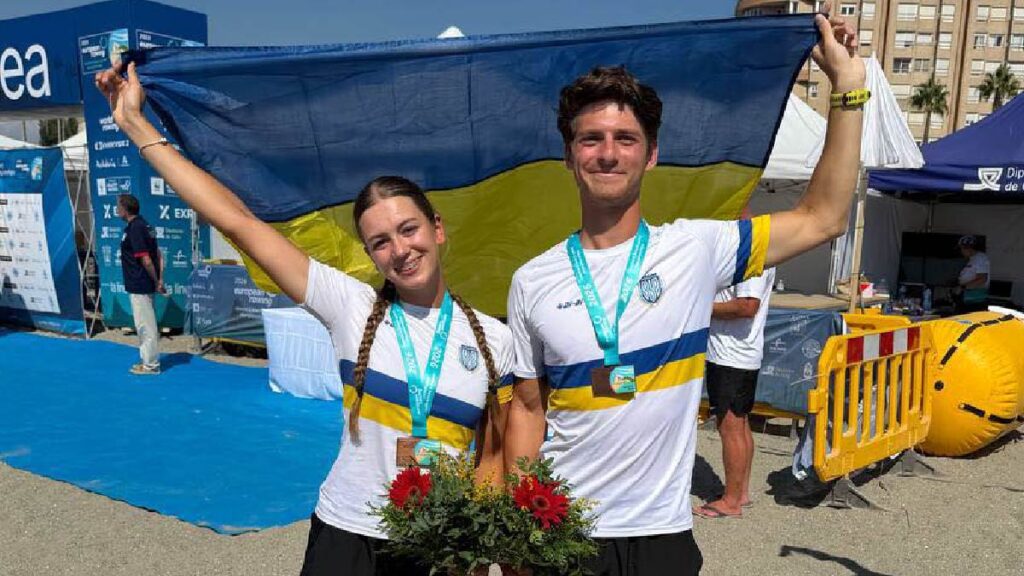
Although Kseniia Ratushniak and Maksym Sivko won a bronze medal at this year’s European championships, and set the second fastest time across the two junior mixed double finals, they won’t be racing at world championships in Qingdao, China, because of one big reason: Russia’s war against their country. And born just 12 days apart in August 2008, the two Ukrainian rowers will both turn 19 next year. Their junior mixed double, which came fourth at Antalya 2025, will age out before Oeiras 2027.
Meanwhile, a total of four Russian and five Belarusian athletes will compete at Qingdao 2026. This marks the first time both Russia and Belarus have had rowers racing in the World Rowing Beach Sprint Finals (although Belarus entered a junior men’s double at Oeiras 2021, it didn’t start). Of course, they’ll technically be doing this as “Individual Neutral Athletes”, but they will be there nonetheless. And while they may not be allowed to raise their flags or sing their national anthems, back home, they’ll still be seen for what they are. At international championships earlier this year, state-owned news agencies TASS (Russia) and BelTA (Belarus) celebrated their rowers’ progress as national successes.
After Russia and Belarus conspired to attack Ukraine early in 2022, the International Olympic Committee imposed tough sanctions on both countries, essentially barring their athletes from international competition. World Rowing echoed those actions, and called for the entire rowing community to support Ukraine in whatever way that it could.
Miraculously, Ukraine has managed to resist the Russian aggression, and a war that was expected to last weeks is still far from over 4.5 years later—proof perhaps that just as in sports, in the wider world, even underdogs can upset superpowers.
However, earlier this year, the IOC provisionally lifted its restrictions against Belarus and Russia, opening up the possibility that their athletes could not just compete internationally again, but do so under their national banners, and even pursue qualification for the LA28 Olympic Games. World Rowing’s response has been more muted, permitting the athletes to return, but only as neutrals.
The IOC’s statement on removing restrictions against Belarus, published in May, states that “athletes’ participation in international competition should not be limited by the actions of their governments.” And its announcement on relaxing the rules against Russia, which came two months later in July, highlights the fact that the Russian Olympic Committee is no longer affiliated with sports organizations based in occupied Ukrainian territories, and no longer conducts any activities there.
But athletes in Ukraine continue to suffer because of the actions of the Russian and Belarusian governments. And, directly because of the war, Ukrainian sports organizations struggle to conduct activities not only, obviously, in the occupied territories, but also in the rest of their country.
Ukraine has a coastline along the Black Sea of more than 2,700km, longer than that of Portugal, and in peacetime that might mean lots of opportunities to develop coastal rowing. Ratushniak is from Odesa, on the shores of that sea. But she and the rest of Ukraine’s beach sprint athletes train instead on the Dnieper River near Kyiv. When they need to practice rowing in waves, they use a coach’s launch to create a wake.
“We have everything in Kyiv, because we cannot go to Odesa,” explains Olha Stydova, who describes herself as a little bit of everything: Masseuse, boat holder, doctor, physiotherapist and even a mother to the team. At European championships this year in La Línea de la Concepción, Spain, she was joined by Andrii Derevianchuk, head coach of the Ukrainian national team (flat water and coastal), plus Serhii Chykanov and Denys Kryvulia, both national team assistant coaches. Chykano and Kryvulia worked extensively with the under-19 mixed double this season, and in preparing Ukraine’s under-17 rowers for beach sprint’s debut at the Dakar 2026 Youth Olympic Games.
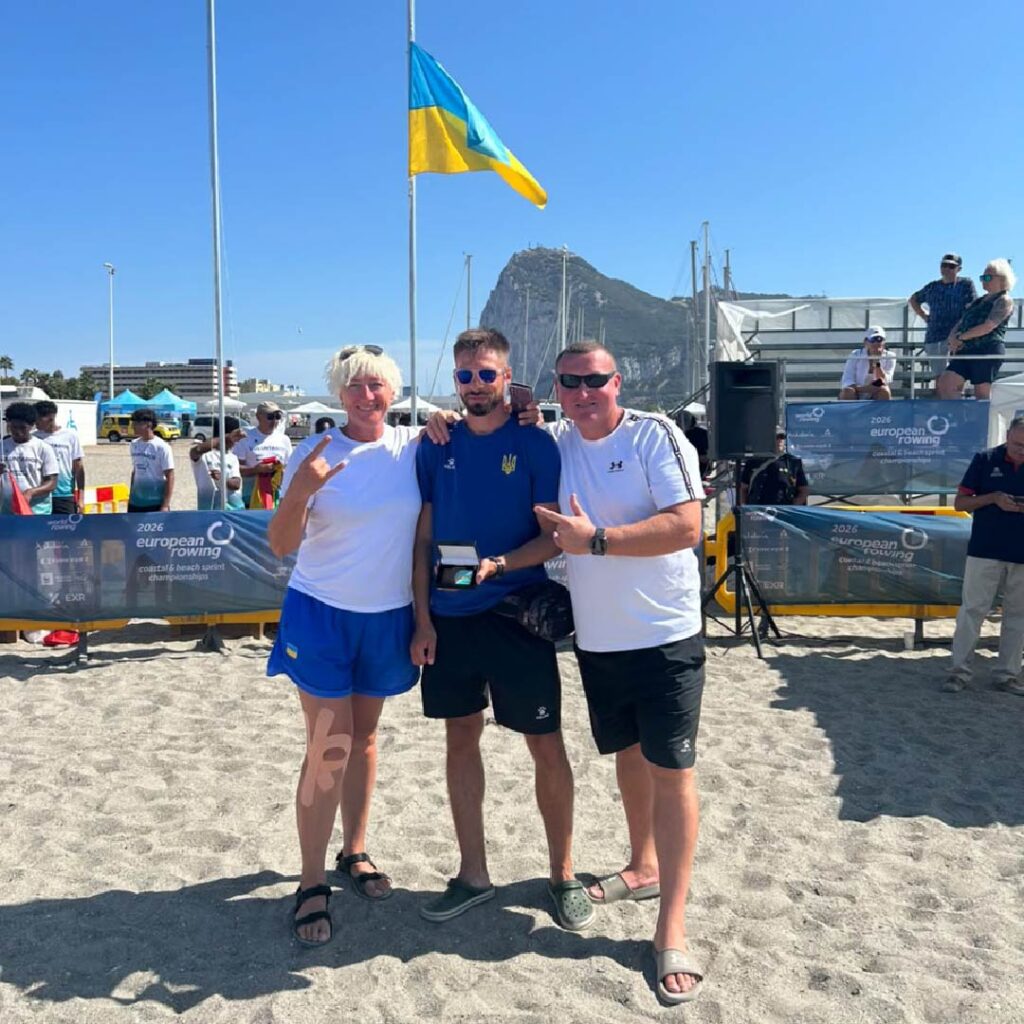
“Odesa is really dangerous. It is dangerous in Kyiv also. It is dangerous everywhere in Ukraine. We have Shahed missiles every day, every night. They make horror for us every night. The Russians make horror.”
“We have to go to basements, sleep there, or not sleep. Wake up in the morning and go for training sessions. For coaches it is difficult but it is O.K. But for children you know it is really difficult. And they have to study at the same time and they have to practice at the same time. It is very scary.”
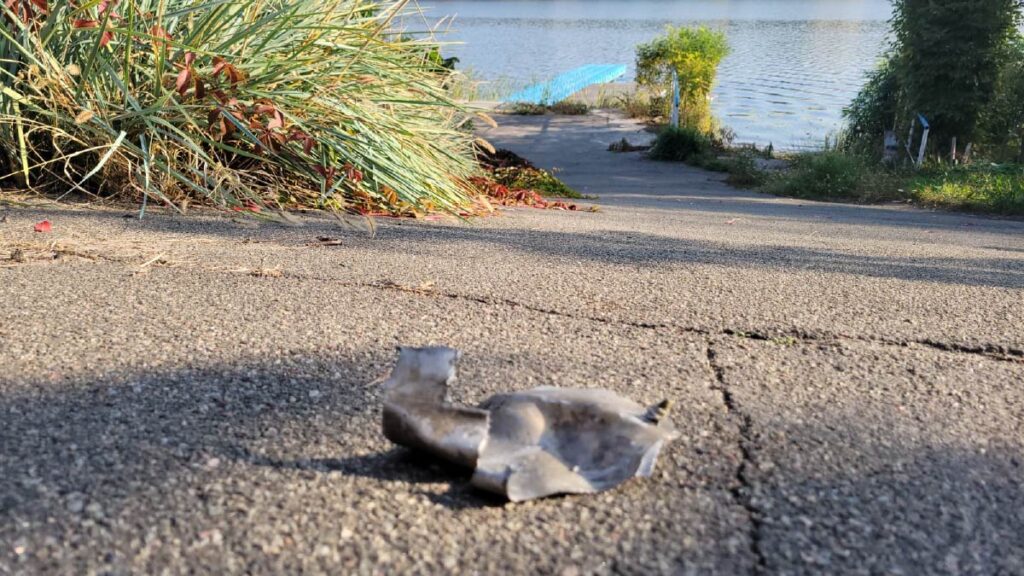
The roof of the Chornomorets Rowing Club, Ratushniak and Kryvulia’s hometown boathouse, in Tairove, near Odesa, is full of holes caused by shrapnel. Ratushniak remembers one training session where at the end of practice the Ukrainian military was shooting down Russian drones barely a few hundred meters away. And, of course, she can’t forget when the boathouse was hit by a direct attack in 2023. The building partially collapsed. Remarkably, two boats survived. The rest, between 30 and 40, were destroyed.

Chornomorets now has a fleet of second-hand boats thanks to two Dutch clubs, the Viking Rowing Club in Utrecht and the Royal Maas Yacht Club in Rotterdam, that sought equipment donations from around the Netherlands in 2024, and then hauled more than 50 boats across Europe in two separate journeys. The clubs’ initiative, named “Boten voor Odesa” (Boats for Odesa) has also brought young rowers from Ukraine to compete in the Dutch International Youth Regatta the last two years.
The story of Ratushniak’s boathouse isn’t unique, either. The Kherson School of Higher Sportsmanship was destroyed by bombs and flooded when Russia destroyed the Kakhovka Dam in June 2023.
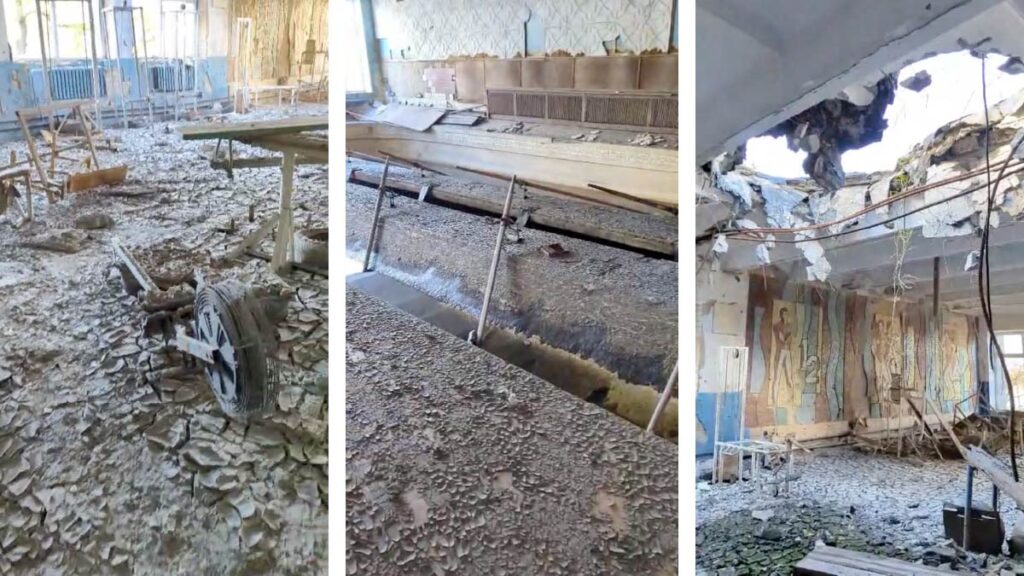
(Andrii Olefyrenko)
And the Ladyzhyn Youth and Sports School, halfway between Odesa and Kyiv, was destroyed by Russian missiles in November 2024. Natalia Topalova, a coach at the club in Ladyzhyn, says the Russians claimed it was a submarine base.
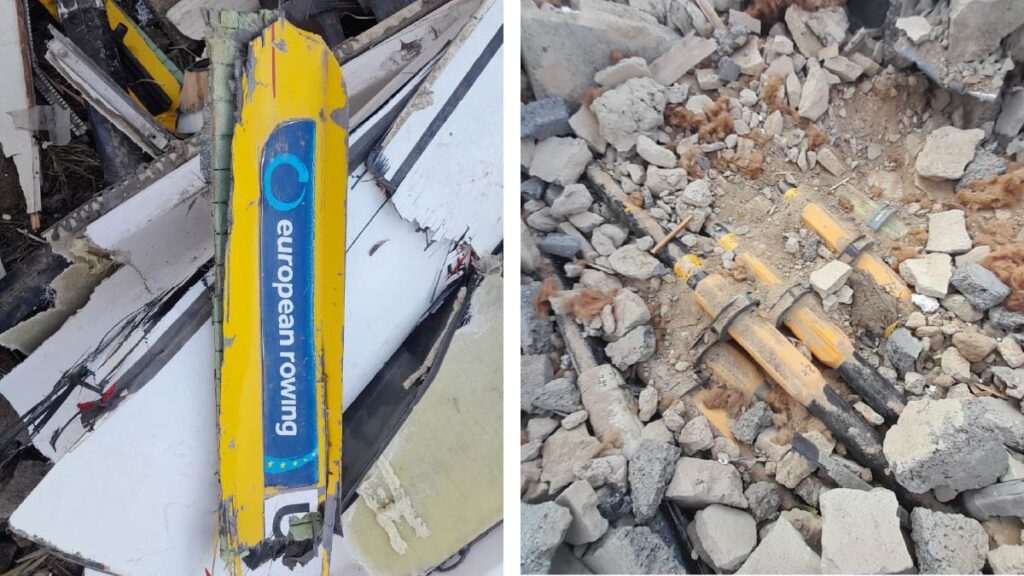
Fortunately, the stories of foreign support have also been repeated many times over the last few years. In 2022, World Rowing raised more than 50,000CHF (53,000€) to support the Ukrainian rowing community. U.S.-based non-profit the Colgan Foundation, which has a long history of supporting Ukrainian rowers from before the recent war, has sent three containers of boats, oars and equipment from the USA. Others have even taken to rowing across seas and oceans to try to raise funds to help out.
That Ratushniak and Sivko, and their teammates in the Ukrainian national teams, have been able to compete at an international level seems remarkable given everything they face at home. Just this year, they both raced in the European and world under-19 championships, and Sivko reached the A final of worlds in the mixed double with Mariana Hrabchak. Ukraine also ranked eighth at senior worlds, thanks to medals from its adaptive athletes who won gold and bronze in the women’s and men’s PR1 singles, respectively, and silver in the PR3 mixed double.
While none of its seniors won a medal at the European beach sprint championships, in the coastal championships a few days later, they picked up silver in the national team coastal women’s solo, gold in the club coastal women’s double and silver in the club men’s coxed quad (with Ukrainian head coach Derevianchuk at the rudder). And to finish out the season, 16-year-olds Viktoriia Radchenko and Mykola Tomchai will represent Ukraine at Dakar 2026 at the end of this month.
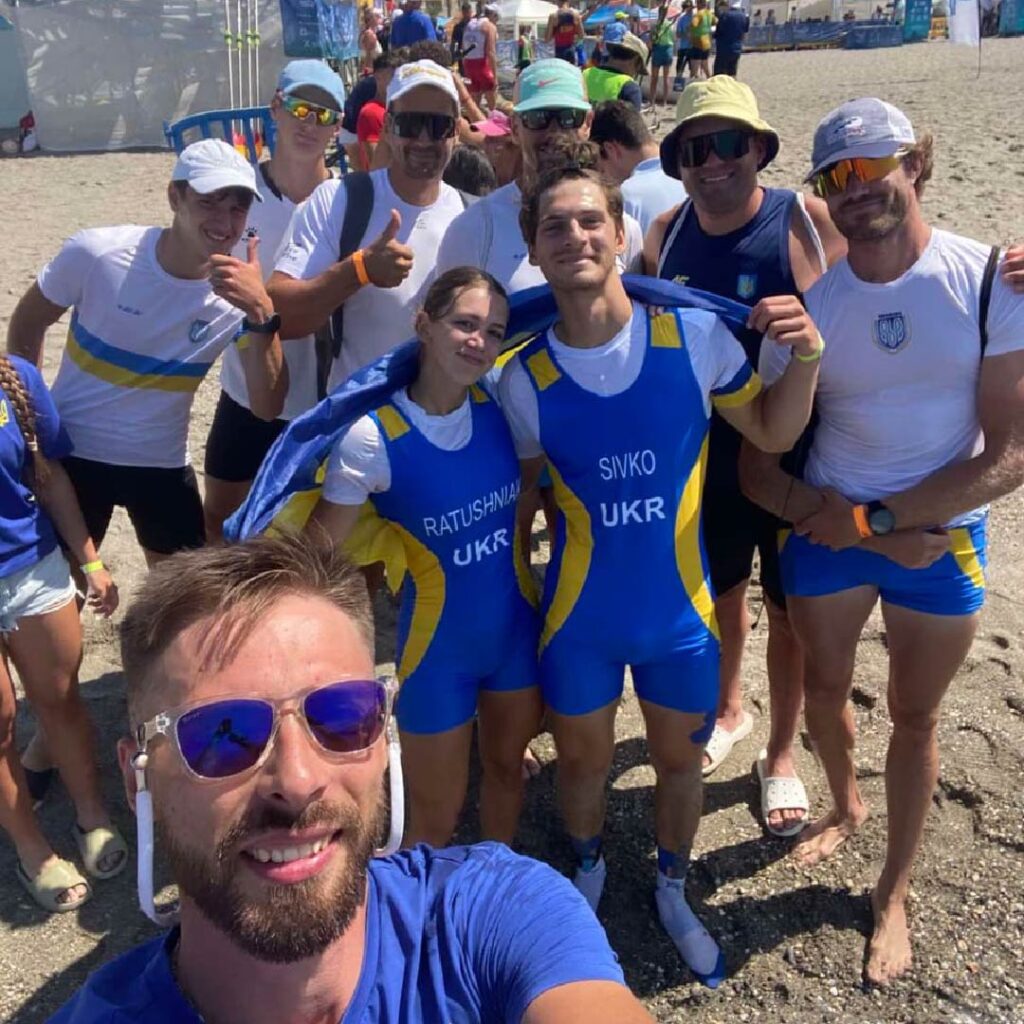
Perhaps sports are a great equalizer. When you remove politics and war from the equation, athletes are athletes and hard work and perseverance can pay off. According to Kryvulia, after Ratushniak didn’t make the team two years ago, she was like a horse, pounding the ground with her hoof and desperate for another opportunity.
In their knockout-round race against Czechia at this year’s European championships, Ratushniak and Sivko reached the shore with a small, but healthy, lead over their competition. “Maks, run!” screamed Ratushniak from stroke seat.
“I was so afraid of her shout,” Sivko says. “I had to run.”
“You know,” Stydova adds, “I was scared too.”
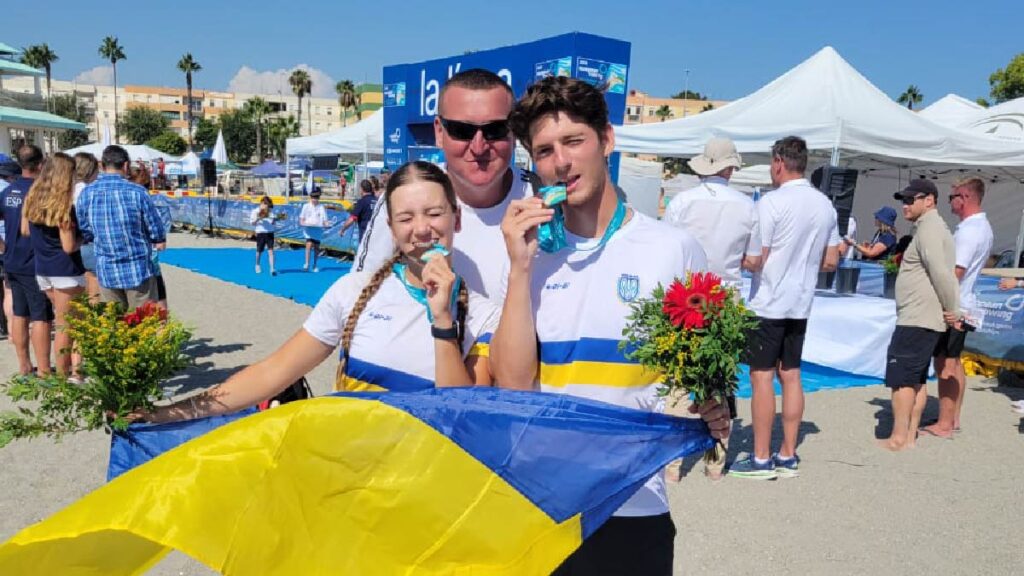
Ratushniak talks about their bronze medal result with a determined smile. “We had the second fastest time.” Out of the two finals in the junior mixed double, only Spain set a better time than Ukraine. The same is true when looking at the fastest times of the entire last eight round: Spain, which Ukraine met in the semifinals, had the edge, but Ukraine had the edge over everyone else. “We’re undefeatable,” Ratushniak says. “We’re Ukrainian.”
Cost and complexity explain why Ukraine won’t be at the 2026 world championships. To some extent, other European countries might say the same thing when asked to explain their absence in China. Sweden, for example, decided to end its season at European championships because it can’t afford to send athletes to Qingdao. And there are seven other countries that competed in Europe but won’t travel to worlds: Bulgaria, Denmark, Georgia, Ireland, Israel, Norway, Serbia and Slovakia.
But the complexity faced by Ukraine is on a very different scale. Under Chinese visa rules, holders of passports from most European countries, including Belarus and Russia, can visit China for up to 30 days without a visa. Unless they are simply transiting through the country, however, Ukrainian citizens do require a visa. And even leaving Ukraine isn’t easy. Male athletes old enough to be called up for military service need special permission to cross the border, and when the team travelled to Spain to compete in the European championships, Russia launched massive airstrikes.
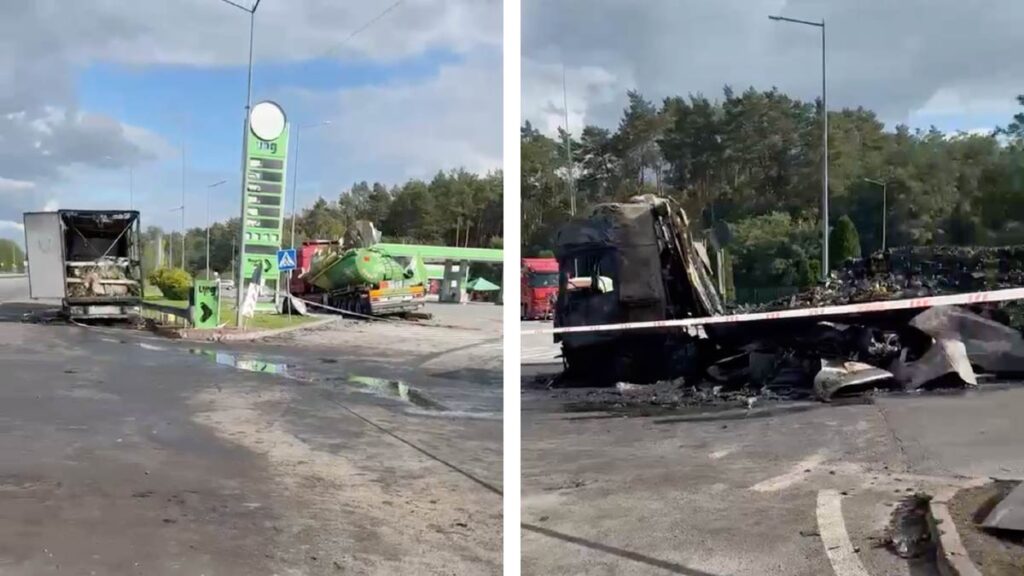
According to the Ukrainian air force, the night of 12 September, Russia deployed more than 450 explosive drones across the country. Western media reported that some of the strikes may have been targeting former British prime minister and former CIA director David Petraeus, who had been visiting Kyiv and crossed back into Poland that night. Stydova had to shelter for four hours in the basement of the train station in Zdolbuniv. When the team crossed the border the next day, they saw the burned out husks of trucks that had been hit.
Stydova says that, aside from Radchenko and Tomchai’s trip to Dakar, she expects her athletes now to be sent home to train at their own clubs. There won’t be money to continue until the next financial year begins in January. “We don’t know what we’ll do.” Ultimately, the reason Ukraine doesn’t have the money for a trip to Qingdao comes back to the same major reason: the war.
“[But] enough about the war,” Stydova says, trying to change the subject. “Let’s talk about rowing, about beach sprint.” Yet as much as she doesn’t want to mention it, the conflict remains an ever present shadow.
And one of Stydova’s biggest fears is silence. If the world begins to forget about what is still happening in Ukraine, support for the country could fade away, and as undefeatable as the Ukrainians may have been so far, she knows that they won’t be able to defend their home alone.
The presence of neutral athletes in China is perhaps the first sign of that silence. The fact that Belarusian and Russian rowers are returning to international competition supports the idea that this war might be over, or at least might be coming towards its end. But in Ukraine, this war is far from over.