
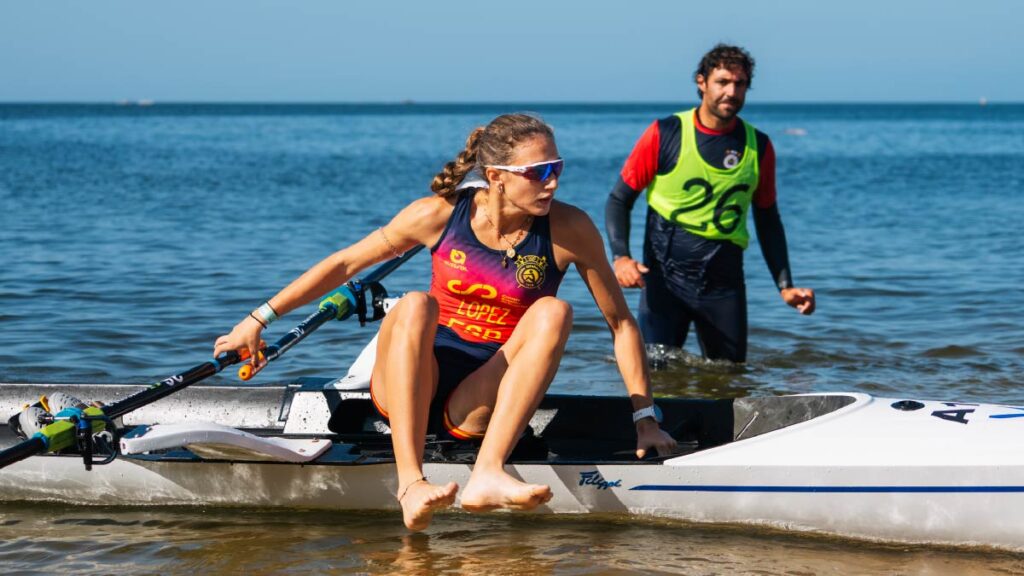
If beach sprint is rowing, Spain’s success in this discipline is an anomaly. The country has just one Olympic rowing medal—Fernando Climent and Luis Lasúrtegui’s silver in the coxless pair at Los Angeles 1984—and is ranked 26th all-time at world championships in classic rowing. In stark contrast, it leads the all-time medal table at beach sprint worlds, with 11 golds to second-placed USA’s seven (and six to five if excluding junior and adaptive events) and is the only country to have won a gold medal at every edition of the world championship.
We’ll find out in less than two weeks whether Spain can extend that winning streak for one more year, and whether it will remain at the top of the overall table. The signs from this year’s European championships are good, though, at least if you’re a Spanish fan: four gold medals and two silvers out of seven events, the most dominant outcome for any team in the five-year history of that event.
But perhaps the biggest question isn’t whether Spain will remain at the top of this sport, and be among the favorites for its debut at the LA28 Olympic Games, but why and how it got there in the first place.
Ander Martín, a two-time world champion in the mixed double with Esther Briz and the reigning European men’s solo champion—Briz is the women’s champion—believes that a lot comes down to geographical luck.
“It’s because of the coasts that we have, the beaches that we have, the climate, the people, the food, the clubs,” Martín says. “In the end there are many clubs on the coasts. And these clubs have been betting on coastal rowing for many years.”
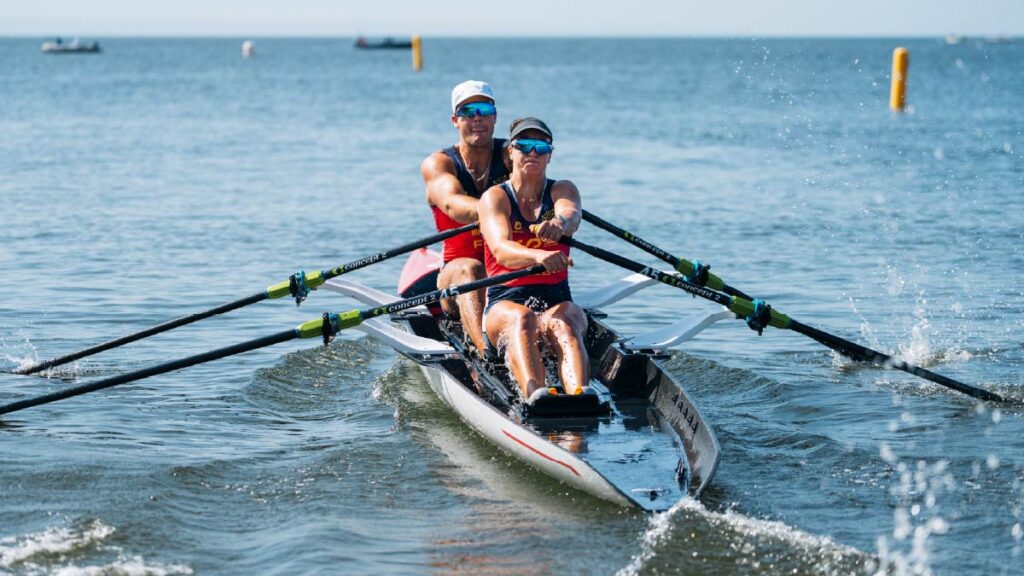
Peninsular Spain, where the vast majority of the country’s rowing clubs are based, is roughly equally divided between the north and the south, both with about 2,400km of coast line. But because of the generally warmer climate and calmer water of the Mediterranean, coastal rowing and beach sprint mainly developed there.
Martín’s teammate Teresa Díaz, two-time world champion in the mixed quad, sees something essentially Spanish about beach sprint.
“Because of our human nature, this sport is made for us,” she says. “There are lots of changes, there’s a lot of stress, there’s a lot of uncertainty. Spanish culture is like that: spontaneous.”
This year, at the final round of the Filippi Trophy in Donoratico, Italy, in June, big waves first delayed the start of racing and then threw in upsets as sea conditions rapidly changed. At the Long Beach Sprints on the soon-to-be Olympic beach in Los Angeles later the same month, a buoy escaped and pushed back the start of competition by two hours. And even at European championships in La Línea in September, races were stopped when the course had to be adjusted after the swell had moved one of the turning buoys.
“Either you learn that beach sprint is like that and you accept it,” Díaz says, “or you go crazy.”
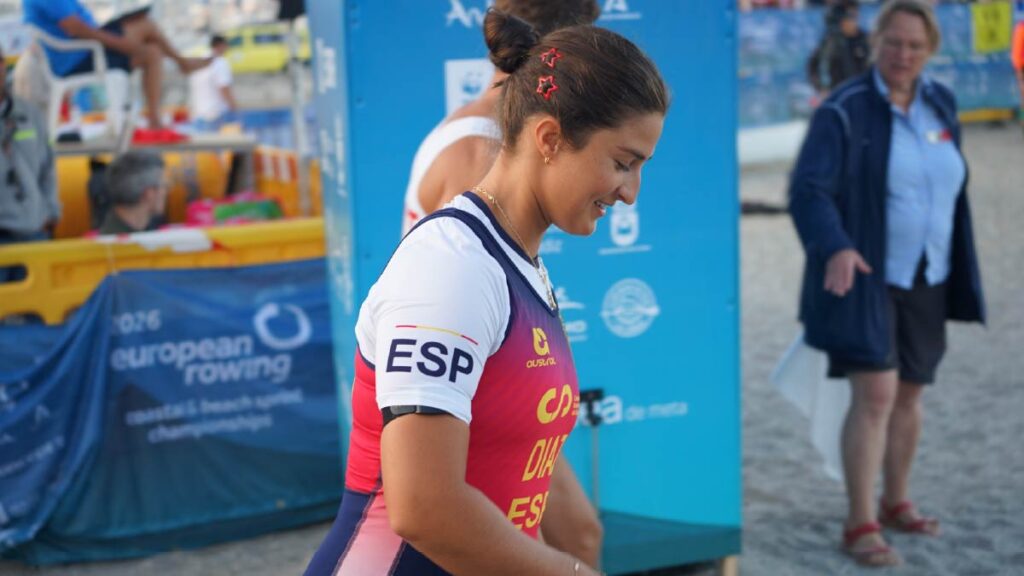
U.S. head coach Marc Oria, who might now be part of the American system but grew up on the Mediterranean coast in Barcelona, agrees that culture has been a key factor, especially in learning and developing technical skills that don’t fit into the mold of classic flat-water sprints.
“We grow up in the ocean, and we grow up doing traditional rowing: llauts and yolas,” Oria says, referring to Spanish traditional fixed-seat, eight-rower boats known as llauts and coastal coxed fours known as yolas. “Some of their races are on the sea, but all require turning. Making turns is a daily skill for us.”
“Rowing on the sea is embedded in our culture,” he adds. “Italy is the same. They have the tradition too, they have the culture, they even have their own boats [Filippi] and that makes a big, big difference.”
However, while nearby rivals like France and Italy were every bit as important to the growth and development of coastal rowing in general, Spain has held the edge on them in beach sprint. From 18 total world championship medals each, Italy has five golds and France has two. In contrast 50% of Spain’s haul of 22 have been gold. The fact that France entirely skipped this year’s European championships to begin early preparation for worlds is a sign of how much that matters. Italy’s decision to race different rowers in the solo events between Europeans and worlds might be inspired by the same desire to play catch-up.
“This is the big difference with [classic] Olympic rowing,” says Saudi Arabia head coach Fernando Gómez. “In [classic] Olympic rowing, we’re living a golden age. But it has cost a lot because we don’t have a continued tradition like, for example, the USA.” Spain sent nine rowers to the Paris 2024 Olympic Games, its biggest team since Greece 2004. At London 2012, not a single Spanish rower qualified.
“But in coastal rowing, yes,” Gómez continues. “The truth is that I feel very proud that Spain is a power in coastal rowing.”
Adrián Miramón, arguably the greatest coastal rower of all time, believes that the real differentiator between Spain and other countries might be the people behind the scenes.
“Everyone talks about the athletes, but you have to value the work done by the coaches,” Miramón explains. “Spain is No. 1 in the world in coastal rowing coaches.”
Take a look at staff rosters of national beach sprint teams around the world, and you’ll see significant numbers of both Spanish and Italian coaches. Italy’s Dario Femmino works with Brazil, and compatriot Franco Cattaneo is head coach of China (both flat water and beach sprint). Spanish coaches can be found within the coastal teams of Austria (Sergio Pérez) Hong Kong (Moncho Ferrer) and Saudi Arabia (Fernando Gómez), and Oria has talked about how he relied on his Spanish connections early on.
“It is a shame that we have so much knowledge and we know so much in Spain, but that there are coaches that have to go abroad. Everything that they worked out, everything that they know will help other countries. We are giving things to other countries that will work against us,” Miramón says. “But people need to earn a living. If in the future I was a coach, and an opportunity arose, I would take it.”
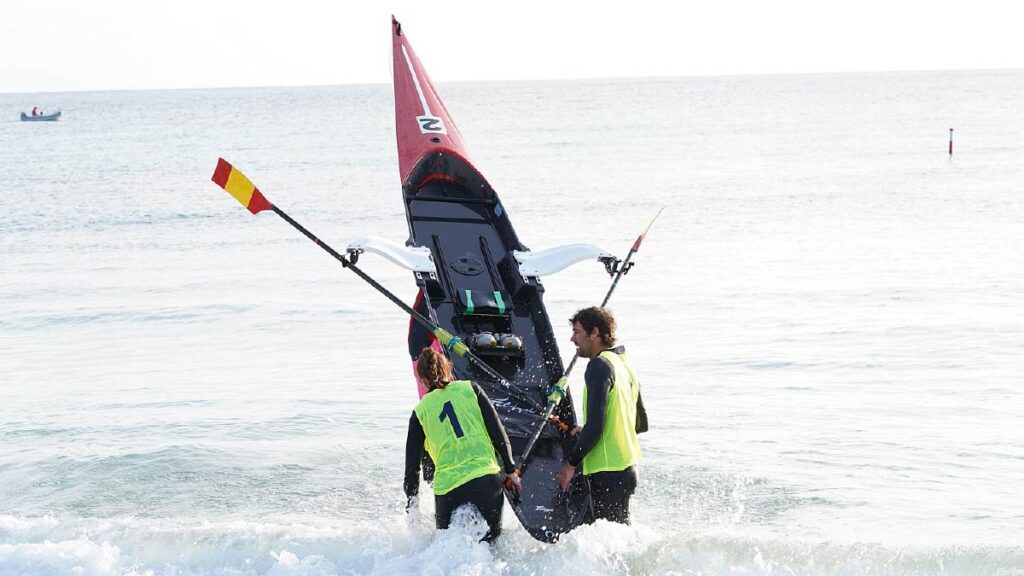
Andrés Redondas, Spanish beach sprint head coach, thinks that the fact Spain, and especially coaches along the Mediterranean coast, fully embraced beach sprint so early explains a lot.
“A generation of coaches came together who wanted to learn,” Redondas says. “We all came from classic Olympic rowing—I worked in the classic rowing national team four or five years before coming to beach sprint—but we gave this opportunity to beach sprint and we gave it this chance to grow.”
“Here in Spain we managed to give it the seriousness that an Olympic sport deserves. I believe that that was an important reason why it grew here.”
Before the Spanish team began to be selected through trials and tests in 2023, the winning boats from national championships would race for the country at worlds. And half of the eight gold medals from that era were won by rowers representing Real Club Mediterráneo in Málaga. Behind much of that success were José López (now head coach of the club) and Sergio Pérez (now working with the Austrian national team).
“We began to look at the angles of the stroke. We began to study the spread,” López explains. “The boats were heavier. If we wanted to go at higher rates, we needed the oars to be shorter. We were the first to row with the oars the shortest possible. They didn’t even exist in the market at the time. The basic technique is similar, but the speed of the boats, the weight of the boats, everything is a little different, and that means that the stroke or the feeling inside the boat is different.”
A lot came down to experimentation on the beaches of Málaga, often in the early morning to avoid the crowds of tourists. “We trained more than other people,” López says. “We learned more things, and we learned those things first. How to get into the boats, how to run, how to turn, how to signal.”
The challenge for Spain now, though, will be staying ahead of bigger traditional rowing powers like Germany, Great Britain and the USA. “Now you see that other countries are getting their act together,” Redondas says. “They’re closer, or ahead. There are countries that are doing things, I’m not going to say better than us, but at a minimum equally well.”
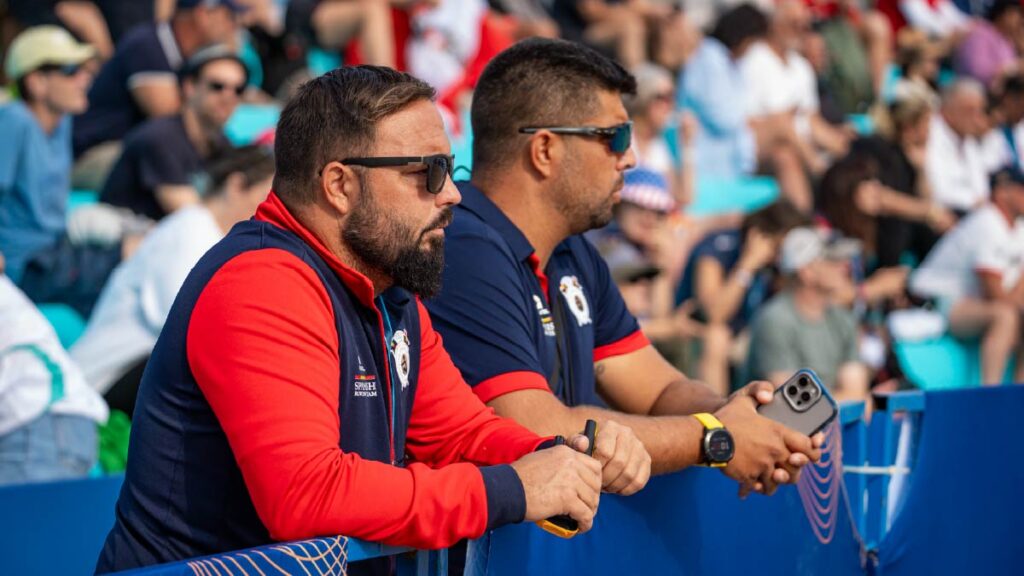
And Spain carries the burden of its success to date. The majority of its beach sprint team, and many of those vying to be in it, are world champions, and the race between them for the two Olympic quota places available is intense.
“The problem that we’re having is that this internal competition is taking away a little bit the possibility of creating long term projects,” Redondas says. “It can be very good, because it gives you continuous performance. But our long term projects are complicated because our athletes have to prove themselves many times during the year.”
“If you get a little distracted, someone else jumps ahead of you. We had selection tests for an entire week from 10 to 23 August, with brutal demands. You have to do these trials, but that’s 10 days where we haven’t been training.”