
If you’re new to the world of beach sprint, we hope this quick guide will get you up to speed. If you’re not, but maybe you’re hoping to explain it to some new fans and athletes, this is for you, too!
(Downloadable, printable and shareable PDF version.)
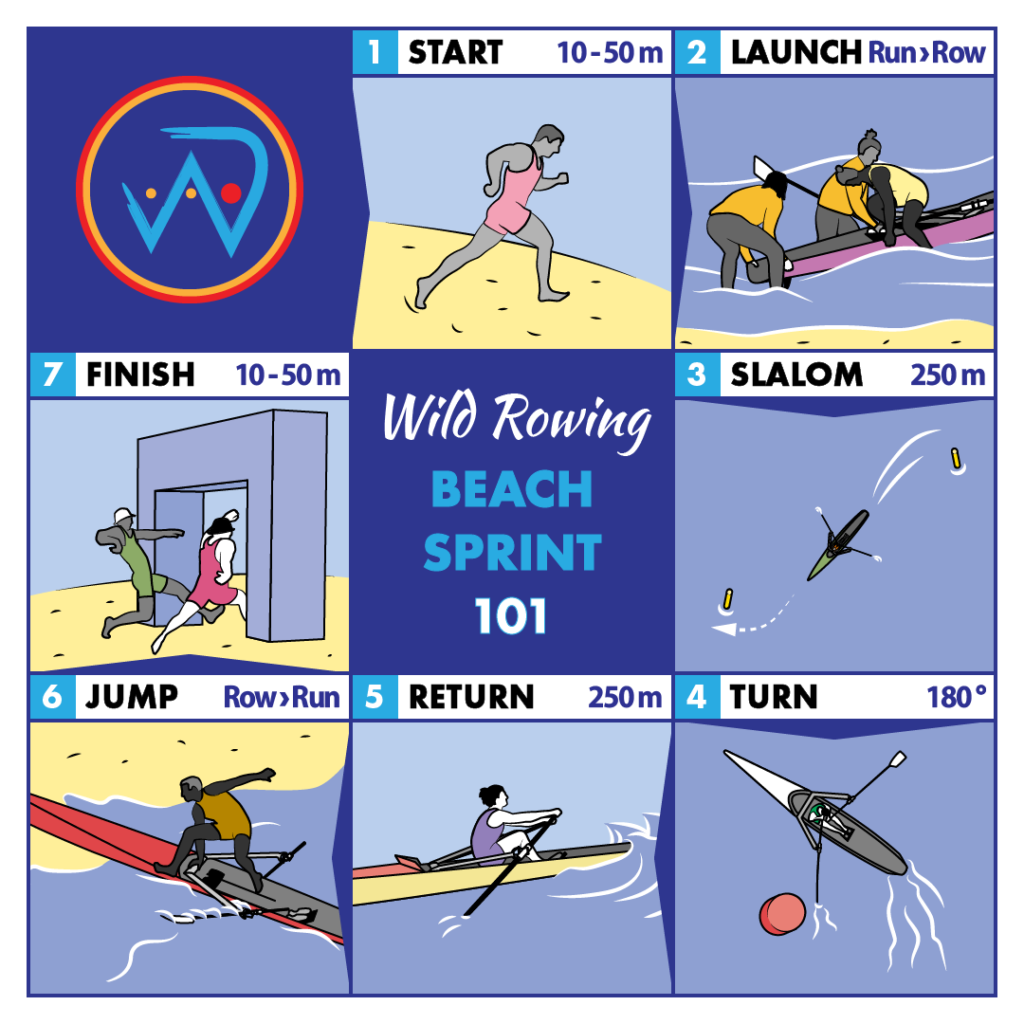
The seven phases of a beach sprint race:
- Start: 10-50m sprint down the beach.
- Launch: Transition from running to rowing.
- Slalom: Row 250m around two pencil buoys.
- Turn: 180° turn around large final buoy.
- Return: Row 250m straight back to shore.
- Jump: Transition from rowing to running.
- Finish: 10-50m sprint up the beach.
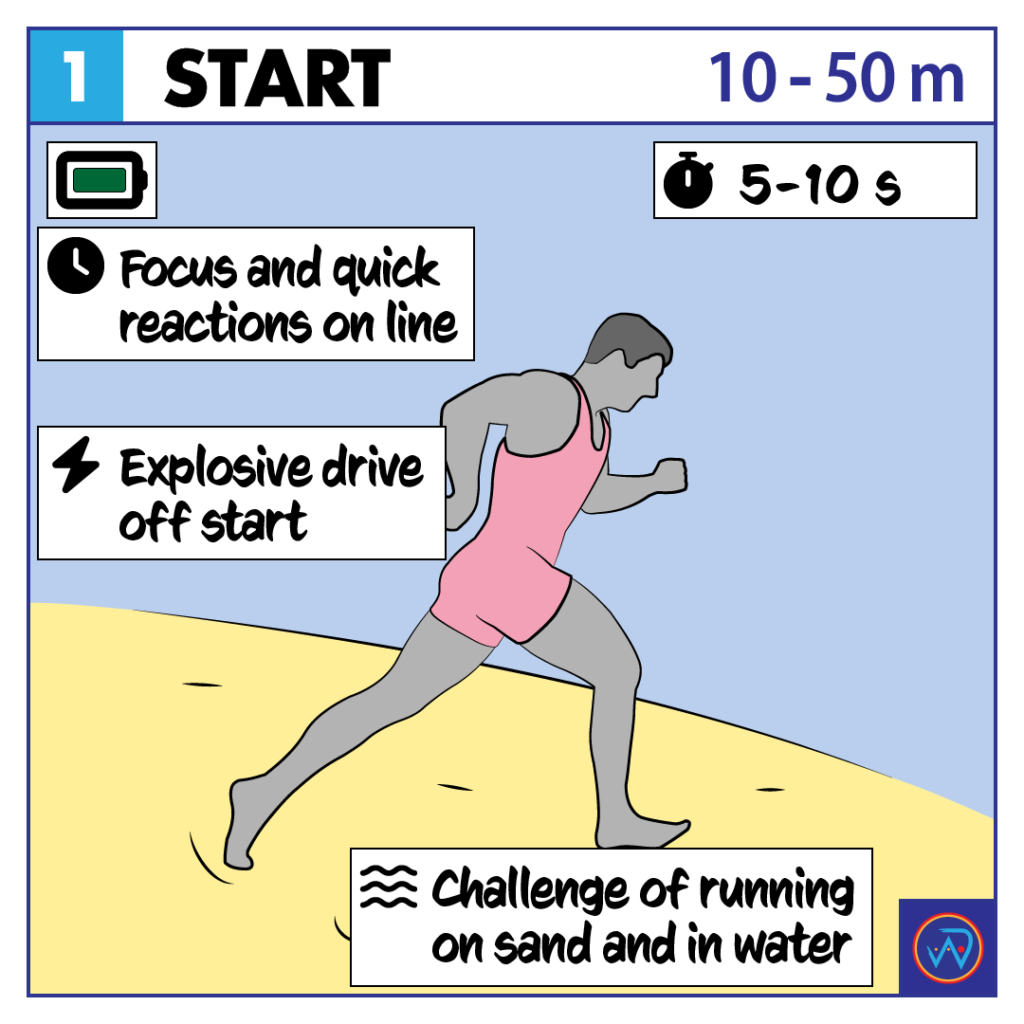
Start
Sprint 10-50m to the boat waiting in the water: 5-10s
- Focus and quick reactions on line. Races can often be decided by less than a second.
- Explosive drive off start line, rapidly accelerating down the beach towards the boat.
- Challenge of running on unstable, shifting sand and in moving water that resists movement.
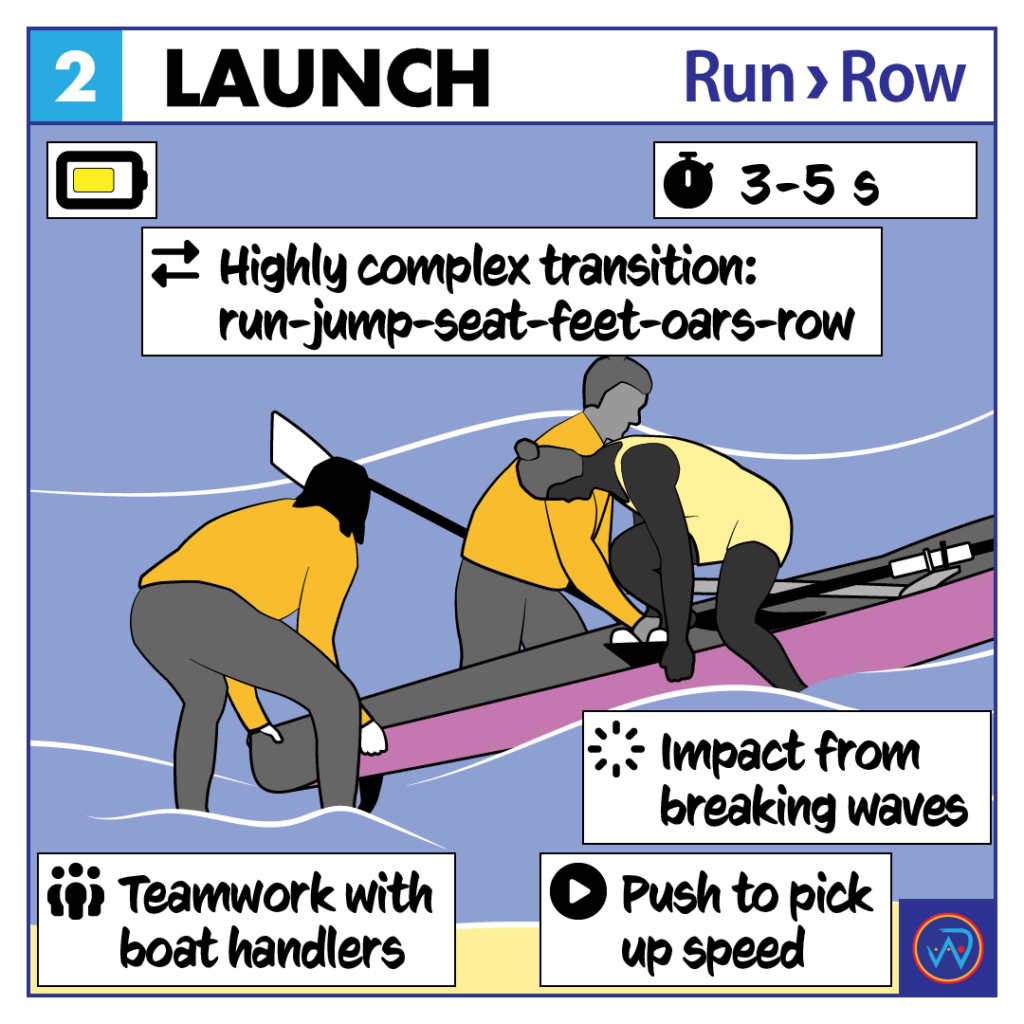
Launch
Transition from running to rowing: 3-5s
- Highly complex transition: run through the water, jump into the boat, sit down on the seat, put feet into the shoes, grab oar handles and start rowing.
- Teamwork and coordination with boat handlers is crucial to reduce wasted time and avoid errors.
- Impact of breaking waves, especially in rough conditions, can move the boat around.
- Push from boat handlers helps quickly pick up speed and get through the surf nearest the shore.
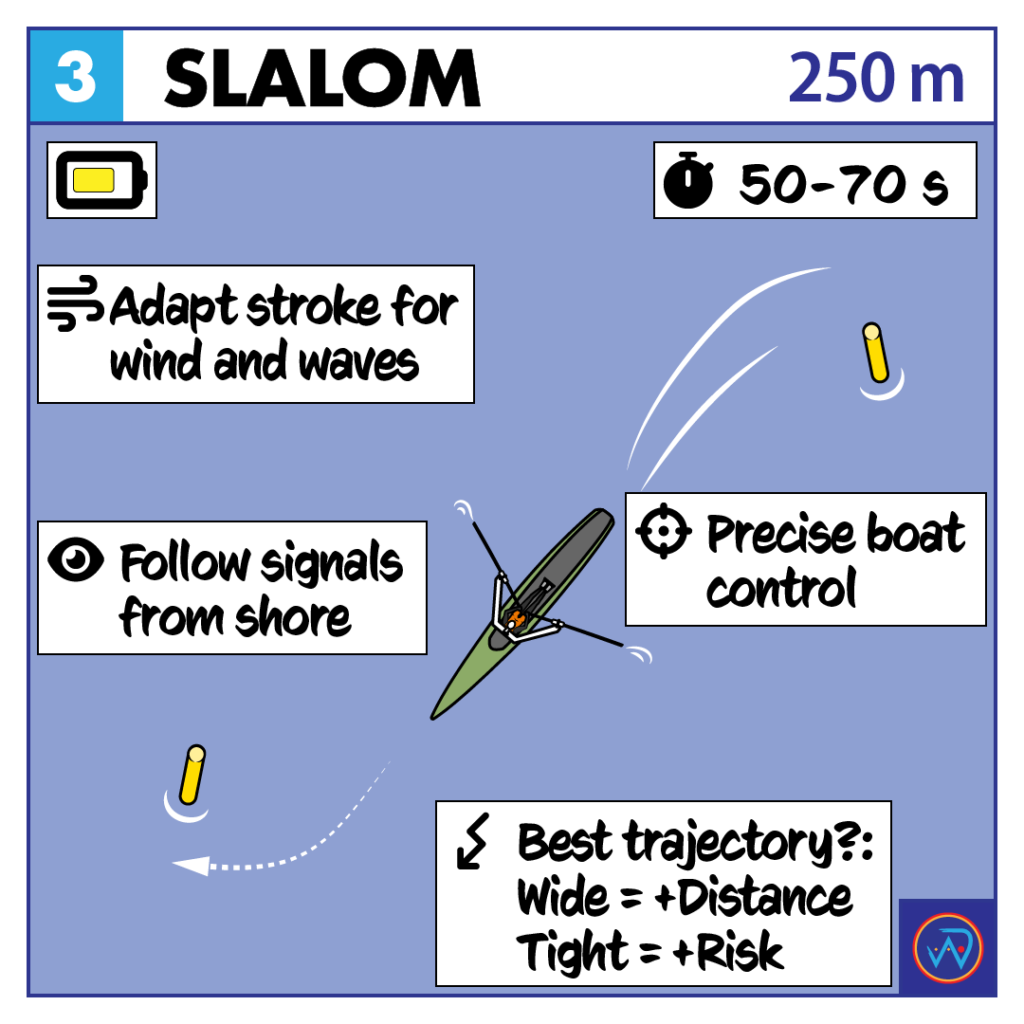
Slalom
Row 250m around two pencil buoys: 50-70s
- Follow signals from boat handlers on shore to reduce the need to look backwards. First buoy must be on the port side of the boat and second on the starboard side.
- Precise boat control is crucial to avoid mistakes like crossing a buoy on the wrong side.
- Adapt rowing stroke for wind and waves, adjusting for direction and instability.
- Choose best trajectory: wider is safer but adds distance, tighter is shorter but adds risk of hitting or missing a buoy.
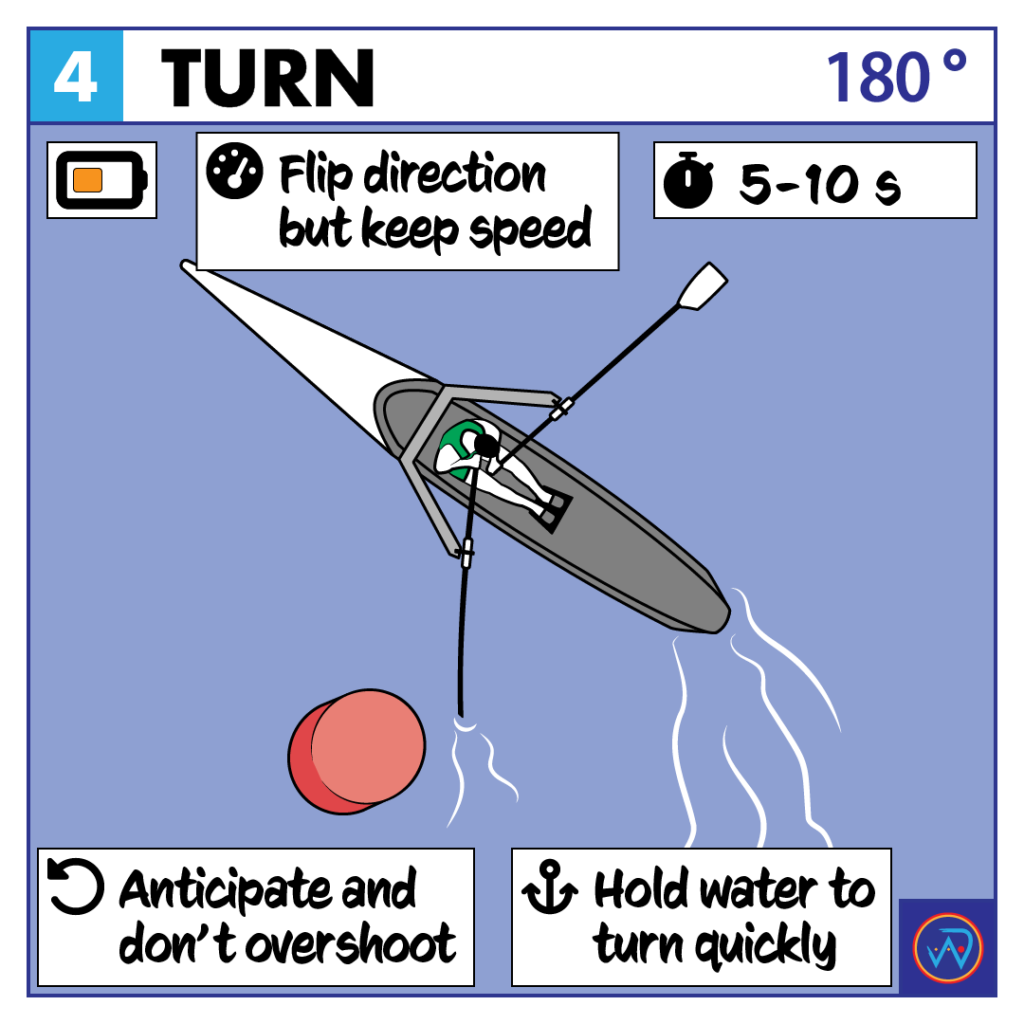
Turn
180° turn around large final buoy: 5-10s
- Anticipate early and try not to overshoot. This can mean a wide line on entry, and beginning the turn before reaching the buoy.
- Hold water with port oar(s) to turn quickly. The turn must with the buoy on the port side of the boat.
- Attempt to make a complete turn while maintaining as much speed as possible.
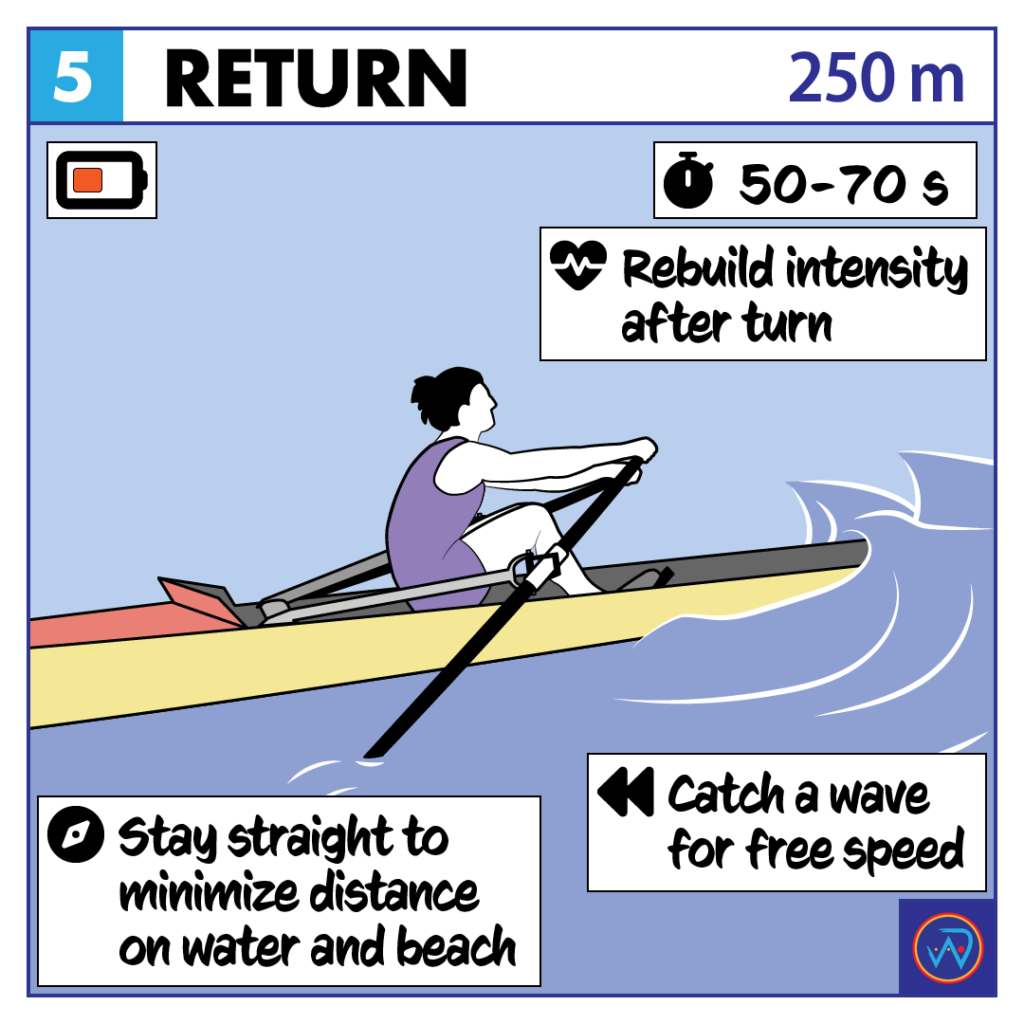
Return
Row straight 250m towards shore: 50-70s
- Rebuild focus and intensity after the disruption of the turn, picking back up any lost momentum.
- Try to catch waves and use the movement of the water to gain free speed.
- Stay straight to minimize additional distance in the water and on the beach during the final run.
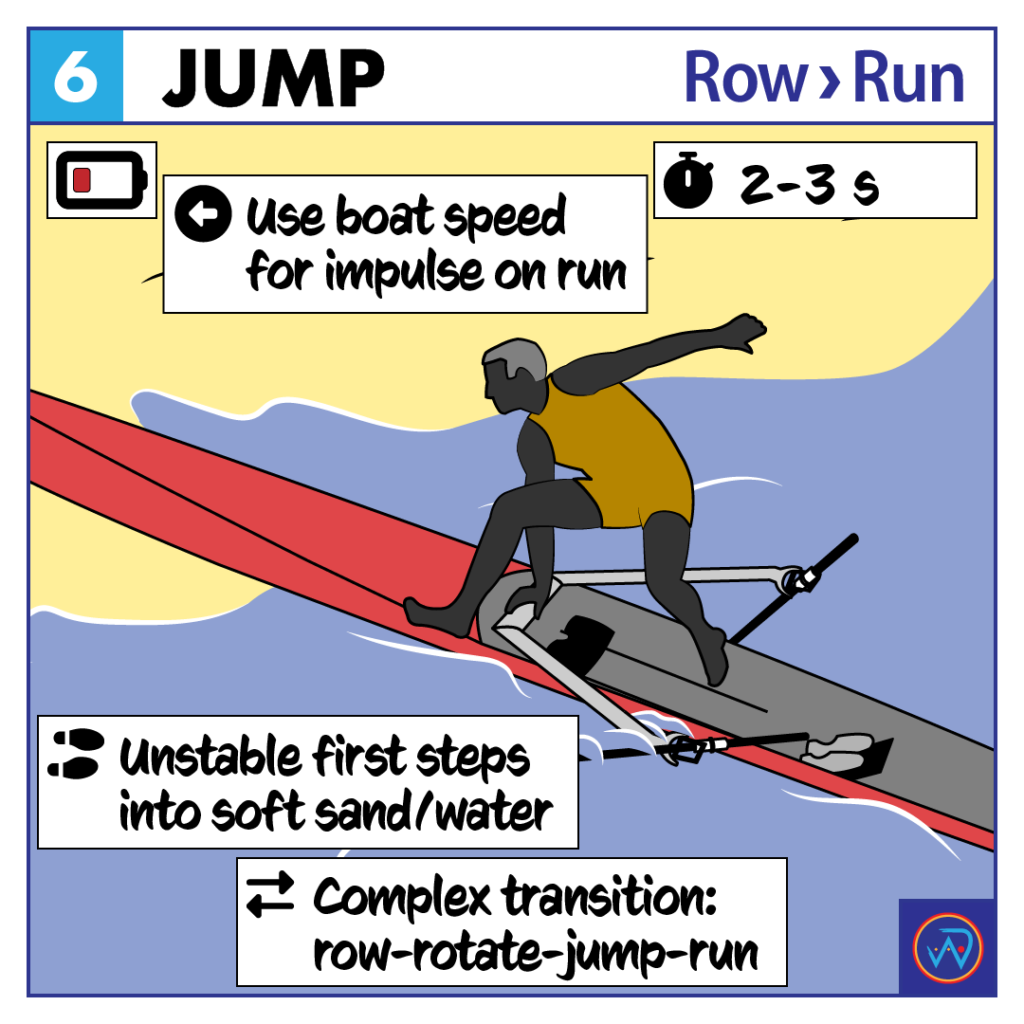
Jump
Transition from rowing to running: 2-3s
- Complex transition: row last strokes, rotate body, jump from boat, begin running.
- Try to use the momentum of the boat for an impulse on the run.
- The first steps are unstable, in soft sand and water, and with a high level of fatigue in the leg muscles.
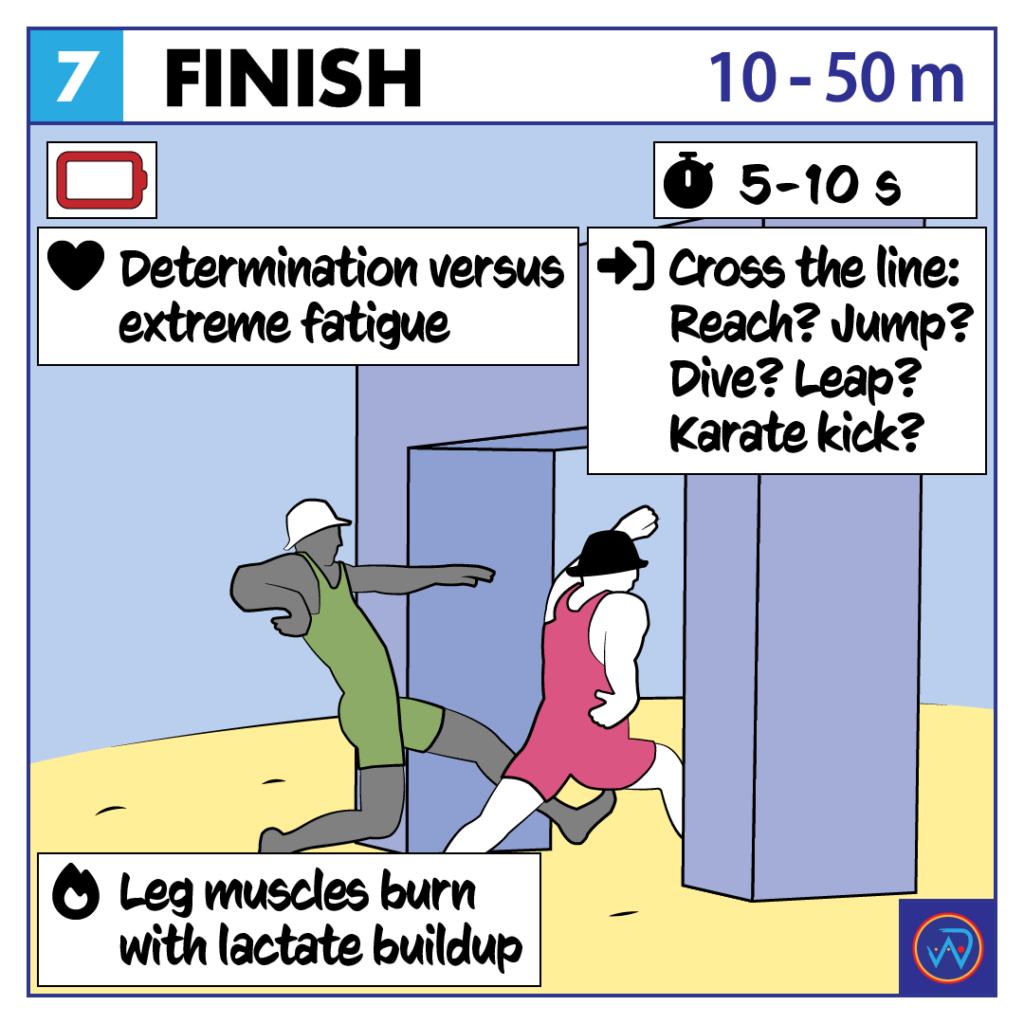
Finish
Sprint 10-50m to the finish line: 5-10s
- Leg muscles burn with lactate buildup, making switching motion from rowing to running difficult.
- Determination versus extreme fatigue. Beach sprint is not jsut a physical challenge but a mental one, too.
- How each athlete crosses the line can depend both on their preference and on external situations. If they have a clear lead, they might walk or jog. If they need to press a buzzer to stop the clock, they might dive. If they are wearing an ankle bracelet sensor, they might try a karate kick.
Did we miss something? Or get it wrong? Let us know.
All illustrations by Wild Rowing, with the addition of free-to-use icons from Font Awesome.